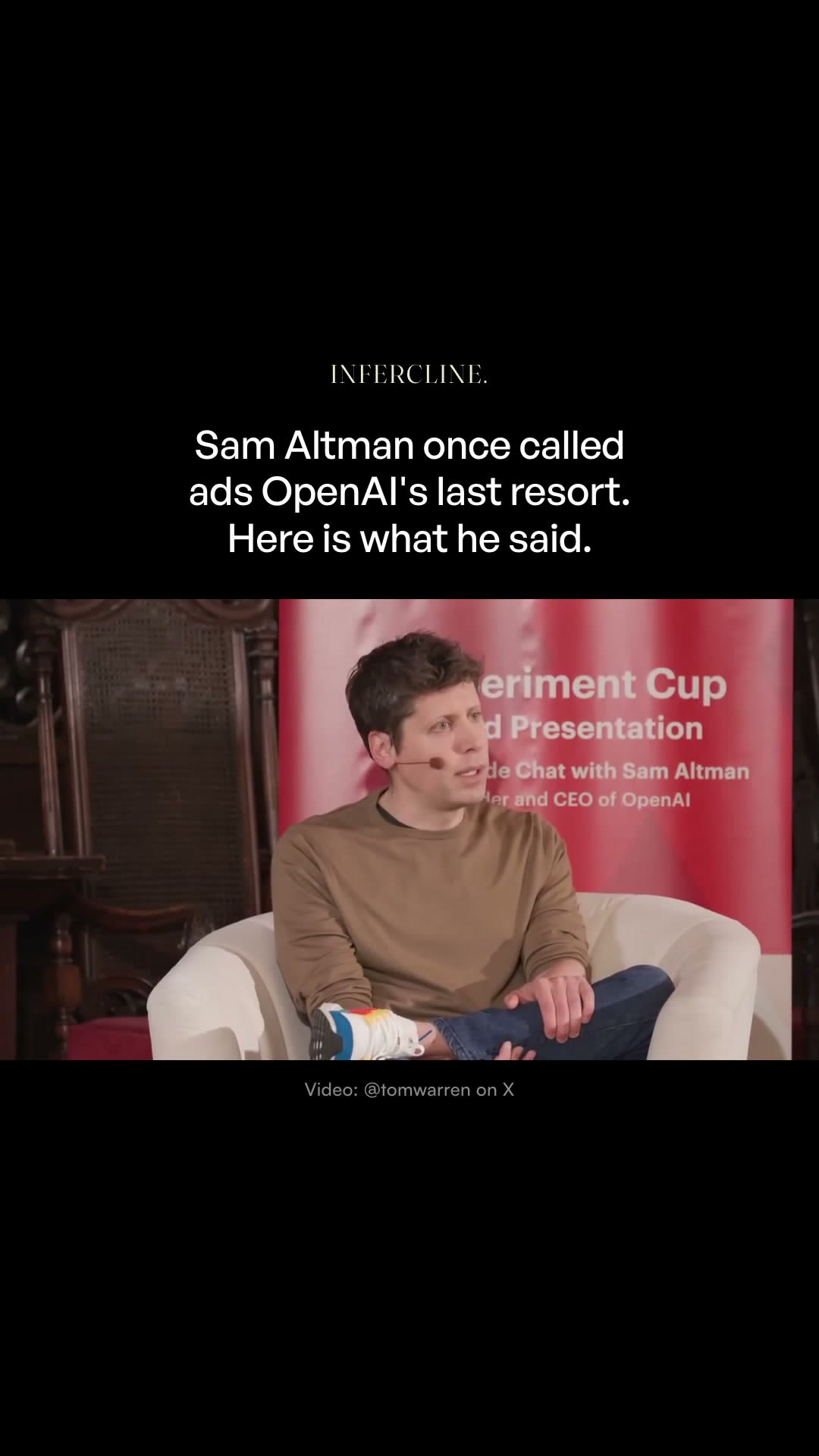
Sam Altman, chief executive of OpenAI, told a fireside chat at Harvard that he saw advertising as "a last resort for us for a business model". Altman said he would accept ads if they turned out to be the only way to bring great services to everyone in the world, but that he would rather find another way to pay for them.
The talk took place at Memorial Church on the Harvard campus, Harvard Magazine reported, at an event hosted by Xfund, a venture capital firm that invests in young companies and was started at Harvard. Xfund's managing general partner, Patrick Chung, was the moderator. In an opinion piece carried by DT Next, the writer recalled that Altman told the audience he hated ads, and that he found the idea of mixing advertising with AI uniquely unsettling.
OpenAI has since changed course. Tubefilter reported that ChatGPT is putting ads in front of logged in users on its free tier and on Go, its $8 a month plan, while people on pricier plans stay ad free. Fidji Simo, OpenAI's incoming chief executive of Applications, wrote that the first ads would sit at the bottom of answers when a sponsored product or service is relevant to the conversation, and would be clearly labelled. According to The Information, as reported by Tubefilter, OpenAI is asking marketers for $60 per 1,000 views.
Why it matters to your business
How an AI company earns its money shapes what it puts in front of you. When a tool is paid for by subscriptions, its job is to give the user the best answer. Once advertisers pay too, a suggested supplier, product or piece of software may be there because someone bought the slot, even when it is labelled. For a business that uses AI to research suppliers or compare prices, that is a new bias to allow for.
It also changes what free really costs. The plans that stay free of ads are the more expensive ones, so a team on the free tier pays with its attention instead of its money. Owners who let staff use free AI accounts for work should know which plan each person is on, and whether the answers they rely on could carry sponsored suggestions.
What to do in your business tomorrow
- When you use AI to shortlist suppliers or products, ask it to name its sources, open two of them yourself, and drop any option it cannot back up.
- List which AI accounts your staff use for work and which plan each one is on, so you know who may start seeing sponsored answers.
More on this topic: AI agent news
Sources
- Harvard Business School: A fireside chat with Sam Altman OpenAI CEO at Harvard University
- Tubefilter: OpenAI's CEO said ads were a last resort business model. Now ChatGPT is getting ads, and asking brands to pay a lot for them
- DT Next: For whose sake: OpenAI making very cynical choice
- Harvard Magazine: OpenAI CEO Sam Altman Speaks About AI at Harvard