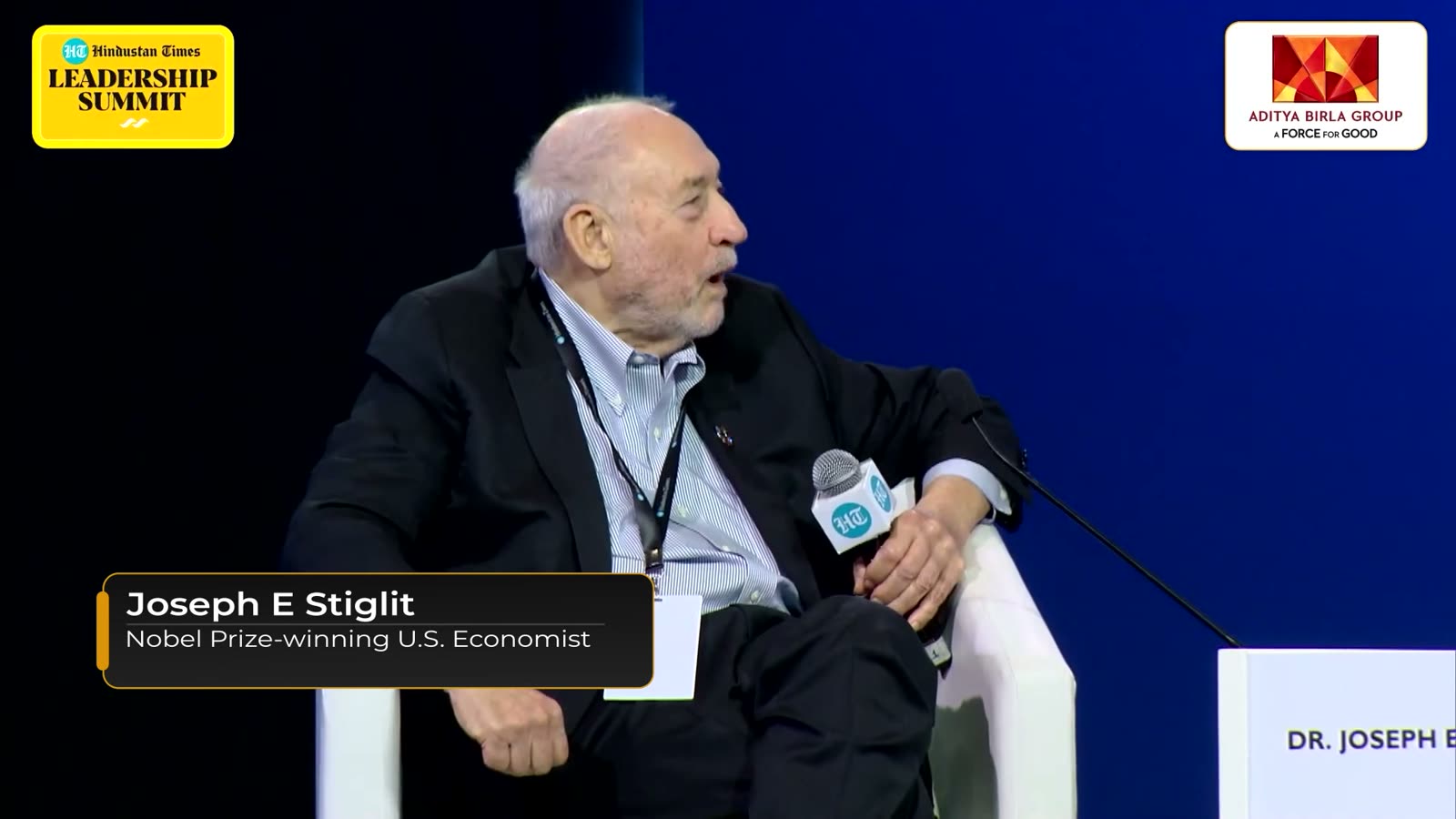
Joseph Stiglitz, who says he called the US housing bubble before it broke, now sees the same thing in AI. Speaking at the Hindustan Times Leadership Summit 2026, in a clip published by Mint, he said: "I think the AI bubble is a bubble and it will break and it will have very big consequences". He estimated that somewhere between a third and two thirds of US economic growth is tied to data centres (the large buildings full of computers that run AI). In his view the wider US economy is not that strong, and is being held up by a large government deficit and an AI boom, neither of which can last.
Stiglitz was careful to separate the technology from the bet. Calling it a bubble does not mean AI will fail, he said; the question is whether the people making enormous investments will earn the returns they expect. For that, he argued, they need some degree of monopoly power (being one of very few sellers), because without it "competition drives profits down to zero". He sees plenty of competition: Anthropic, a company only two or three years old, catching up with OpenAI, and DeepSeek, which has not quite caught up but offers open source models (free to use and adapt) at much lower cost. He added that some American AI companies train their own models on cheap Chinese ones, so AI infrastructure has become interdependent. His conclusion is that there is likely to be enough competition that investors will not get the profits they hope for.
Stiglitz shared the 2001 Nobel prize in economics and was chief economist of the World Bank, BigGo Finance reported in its account of the summit, which also covered his points on Anthropic, OpenAI and DeepSeek. He made the same argument to Fortune earlier this year, telling the magazine that high returns assume both technical success and limited competition, and that fierce global competition, from US giants to Chinese firms, undermines the second. Coverage of the summit carried by China Tech News said he named whether AI investments will earn their expected returns as one of two key challenges the boom has created.
Why it matters to your business
If Stiglitz is right, the pain falls on investors and on the companies that spent heavily up front, not on the businesses that use AI. For a buyer, more competition between AI suppliers usually means lower prices, more choice and less risk of being locked in to one provider. The cheap open source models he mentions are already pushing prices down.
There is a risk side too. A bubble that breaks can hit the wider economy, which means customers, credit and confidence. And if some AI suppliers fail or merge when investors stop paying for growth, a business that has built a key process on one of them may need to switch quickly. Spreading your bets, and keeping your data portable, protects you either way.
What to do in your business tomorrow
- List the AI tools you pay for and compare each one with at least one cheaper rival, including an open source option, to see whether it does the same job.
- Check that you can export your data and prompts from your main AI tool in a format another tool could use.
More on this topic: AI agent news
Sources
- Mint: Nobel-Winning Economist Warns Of 'Classic Demand Problem': Who Will Buy AI If Jobs Are Gone?
- BigGo Finance: Stiglitz says AI bubble will burst and India's services export boom is most exposed
- Fortune: Joseph Stiglitz says buckle up before the great AI reallocation era arrives
- China Tech News: Stiglitz at the Hindustan Times Leadership Summit