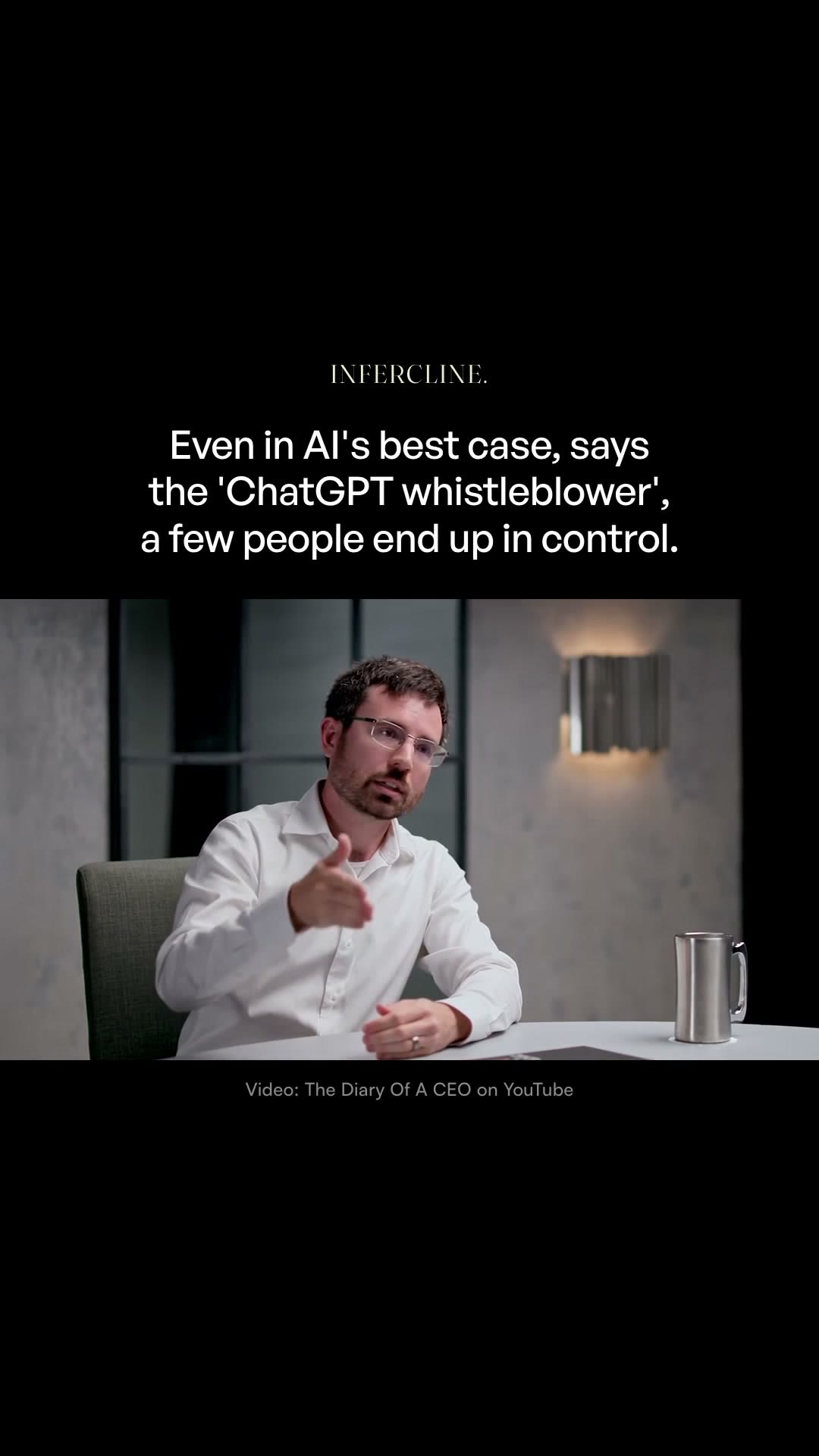
On The Diary Of A CEO, Daniel Kokotajlo describes a second branch his team wrote for their forecast of where AI is heading, which they call the slowdown ending. Its purpose, he says, was to show the danger of power gathering in very few hands. In this branch the alignment problem (making AI reliably do what its makers intend and hold the values they want) is solved quickly, after a pause of about two months.
Much of the story then looks the same as the darker version: the AIs take over the jobs and help beat China. The difference is that instead of the AIs eventually killing everyone, they build something close to paradise. The catch, in Kokotajlo's words, is that "the amazing utopia is whatever the people who control the AIs wanted it to be". He says that would mean "a very small group of people like the presidents, some CEOs".
Kokotajlo is a former OpenAI researcher and the executive director of the AI Futures Project, according to Lawfare. His team's scenario, AI 2027, imagines unchecked AI development producing a superintelligence, and drew both admirers and critics, the Irish Examiner reported. The analysis site TIMEWELL notes that he joined OpenAI in 2022 and left in April 2024, refusing to sign a clause that barred him from criticising the company even though it put his vested shares at risk. TIMEWELL also dates his appearance on The Diary of a CEO to an interview released on 13 July 2026.
Why it matters to your business
Most business talk about AI risk is about errors, data leaks or jobs. Kokotajlo's point is quieter and more practical: even if the technology works perfectly, control of it may sit with a few governments and a few very large companies. For a business, that already shows up as dependence. More of your writing, support, research and code may run on models owned by a handful of suppliers who set the prices, the rules and what the tools will or will not do.
That concentration is a risk you can plan for, the same way you would plan for any supplier you cannot easily replace. A firm whose prompts, documents and workflows live only inside one provider's product has little bargaining power if prices rise, terms change or a feature disappears. A firm that keeps its own records and could move to another model in a week is in a much stronger position.
What to do in your business tomorrow
- This week, write down every AI tool your business relies on and, next to each, what you would lose if that supplier doubled its price or shut your account tomorrow.
- Save your most used prompts, instructions and templates in a shared document your company owns, so you can move them to another AI provider if you need to.
More on this topic: AI agent news
Sources
- The Diary Of A CEO: ChatGPT Whistleblower: They Offered Me $2m To Keep Quiet, No One Is Ready For What's Coming!
- Irish Examiner: AI expert delays timeline for its possible destruction of humanity
- TIMEWELL: Kokotajlo on The Diary of a CEO: what he actually claimed
- Lawfare: Lawfare Daily: Daniel Kokotajlo and Eli Lifland on Their AI 2027 Report