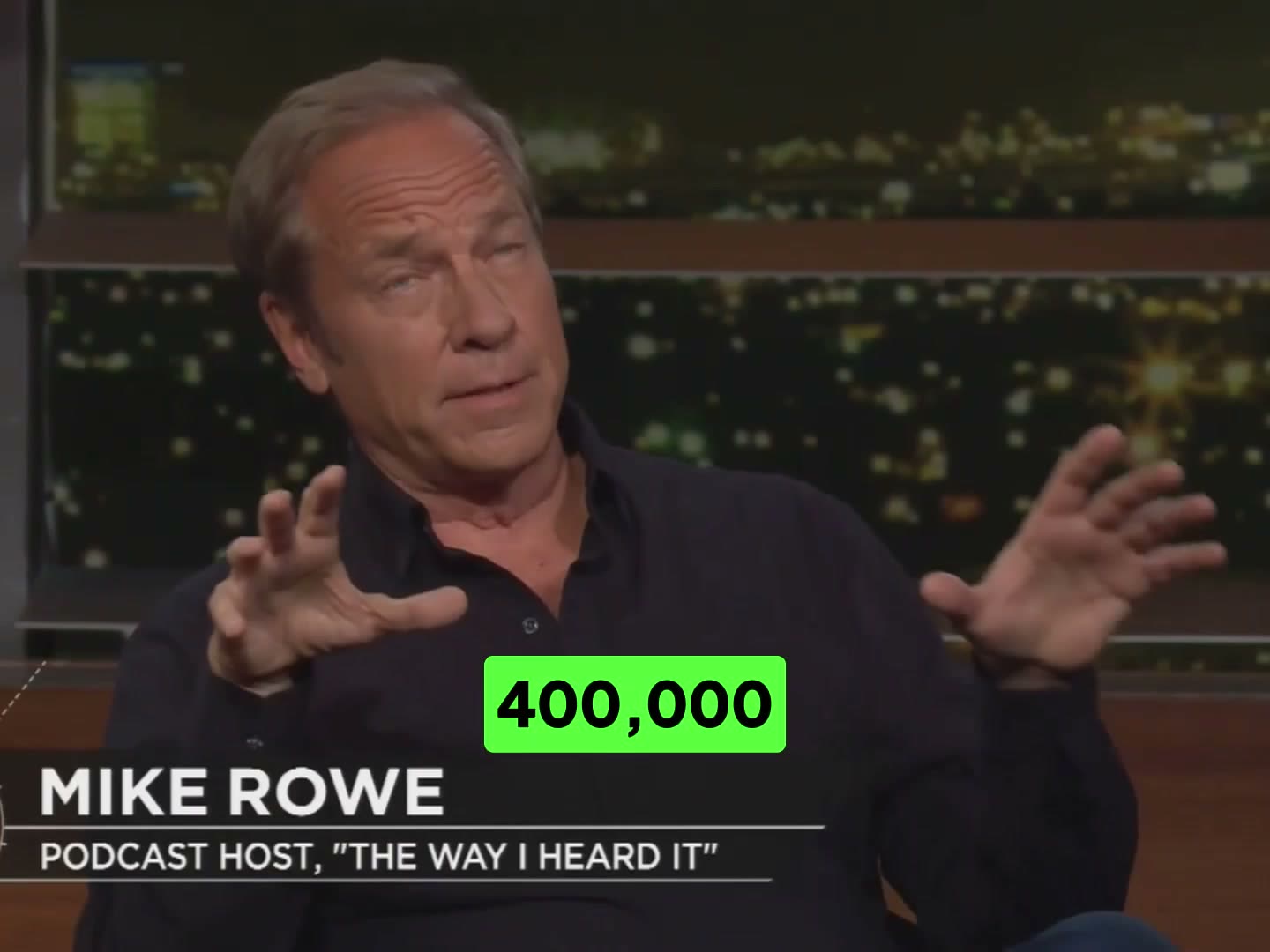
In this clip, Mike Rowe says there are about 400,000 open jobs in construction in the United States, and twice as many in the defence industrial base (the companies that build equipment for the military). He says hardly a week passes without a call from the chief executive of a major company or from a state governor who is worried about finding workers.
Rowe says Ford's boss, Jim Farley, told him the carmaker has 5,000 empty bays (workshop spaces with no mechanic to work in them). "These are AI-proof six-figure jobs, right? 120,000 a year. He can't fill them," Rowe says. His point is that far more tradespeople are retiring than are arriving to replace them, and that this gap has been growing for about 12 years. He calls the numbers frightening.
Rowe is the host of the television series Dirty Jobs and chief executive of the MikeRoweWorks Foundation, according to Fortune. Speaking at a Ford event in Detroit earlier this year, he told Fortune that for every five tradespeople who retire, only two come in to take their place.
Farley's own figures back up the story. Fortune and Entrepreneur both report that Farley, Ford's chief executive, said on a podcast that the company had about 5,000 open mechanic positions it could not fill, with pay that can reach $120,000 a year. Fortune also reports Farley saying that some of this mechanical work needs five years or more of training to master.
Why it matters to your business
Most talk about AI is about office work: writing, admin, customer service and analysis. This clip is a reminder that the opposite problem is growing at the same time. Skilled hands-on work cannot be done by software, the people who do it are retiring, and training a replacement can take years. When one of the largest carmakers in the world cannot fill well-paid roles, a smaller business that depends on a few skilled people is exposed too.
For an owner, the risk is not that AI takes these jobs but that nobody is there to do them. A single retirement in a key trade role can stall a service, delay customers and push up wages as firms compete for the same few people. Businesses that start training their own people now will have a cost and speed advantage over those that wait until a vacancy opens.
What to do in your business tomorrow
- List every role in your business that needs hands-on skill, write down who holds it today and how many years they have before retiring, and mark any role with no clear successor.
- For each role with no successor, pair the current expert with a junior this month so the know-how starts passing on before it is needed.
More on this topic: AI agent news
Sources
- The Vigilant Fox: The Vigilant Fox 🦊 - Mike Rowe reveals Ford has 5,000 unfilled mechanic jobs paying $120,0...
- Fortune: Mike Rowe on purple jobs, politics and the shortage of skilled trades
- Entrepreneur: Ford CEO Says He Can't Fill 5,000 Jobs, Even With Six-Figure Salaries
- Fortune: Ford CEO Jim Farley on 5,000 open mechanic jobs with six-figure salaries