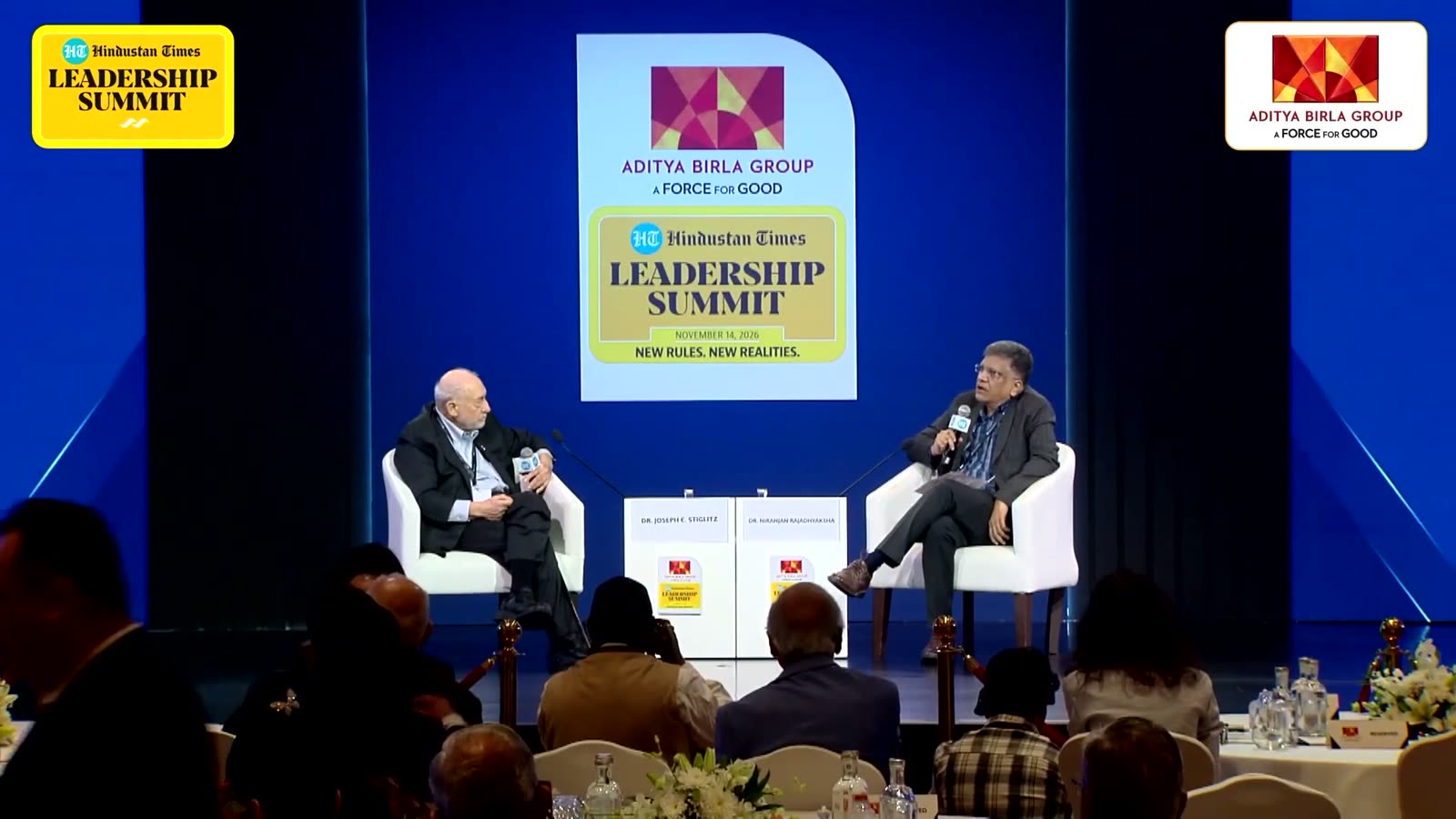
Asked at the Hindustan Times Leadership Summit 2026 whether India has breathing space before AI reaches its workforce, Joseph Stiglitz gave a blunt answer in this clip published by Mint: "I hate to say this, but I think you should be worried". His interviewer had laid out the case for calm. About 44% of India's workers are in farming, and small manufacturing may not be under direct threat for now. The worry is services exports, the dynamic part of the economy, where AI could hit job creation at the higher end of the labour market and also weigh on the current account (the balance of a country's trade and income with the rest of the world).
Stiglitz pointed to where AI has hurt jobs fastest in the US: the tech sector. As he put it, "AI was really good in replacing coders, programmers", and he called it an irony, because those are the jobs that carried much of India's economic transformation. The hard question, he said, is how a country pivots and where it goes next, and that is an open question in America and everywhere else too. The difference is that the US could, in principle, tax the winners of the AI revolution and use part of the money for investment in people. Across borders, where the winners sit in the US and the losers elsewhere, that kind of sharing will not happen. So, he said, countries have to think more strategically about where they place themselves in the global economy.
Stiglitz shared the 2001 Nobel prize in economics and was chief economist of the World Bank, BigGo Finance reported, adding that the conversation was led by Niranjan Rajadhyaksha of Artha Global. Fortune reported that he won the Nobel Prize and that he has warned the US lacks any framework to manage the job losses AI could cause. Coverage of the summit carried by China Tech News said he urged India to put more money into education to soften the effect on employment.
Why it matters to your business
Many businesses buy software development, customer support or back office work from outsourcing firms, and many of those firms are in India. If AI does the coding and text work those contracts were built on, the price, size and staffing of that work will change. Buyers can expect suppliers to offer AI assisted services at lower prices, and should expect quality to vary while suppliers retrain staff.
For businesses that sell those services, the warning is sharper. A model that wins on lower cost labour for routine code and documents is exposed when a machine does the same task for less. Stiglitz's advice to countries works for companies too: decide deliberately where you want to sit in the market, rather than waiting to find out which of your services AI has made cheap.
What to do in your business tomorrow
- Pick one service you outsource and ask your supplier, in writing, how they use AI on your work and whether your price should change.
- If you sell coding or back office services, list which of them a customer could now do with an AI tool, and draft a new offer for the ones at risk.
More on this topic: AI agent news
Sources
- Mint: Nobel-Winning Economist Warns Of 'Classic Demand Problem': Who Will Buy AI If Jobs Are Gone?
- BigGo Finance: Stiglitz says AI bubble will burst and India's services export boom is most exposed
- Fortune: Joseph Stiglitz says buckle up before the great AI reallocation era arrives
- China Tech News: Stiglitz at the Hindustan Times Leadership Summit