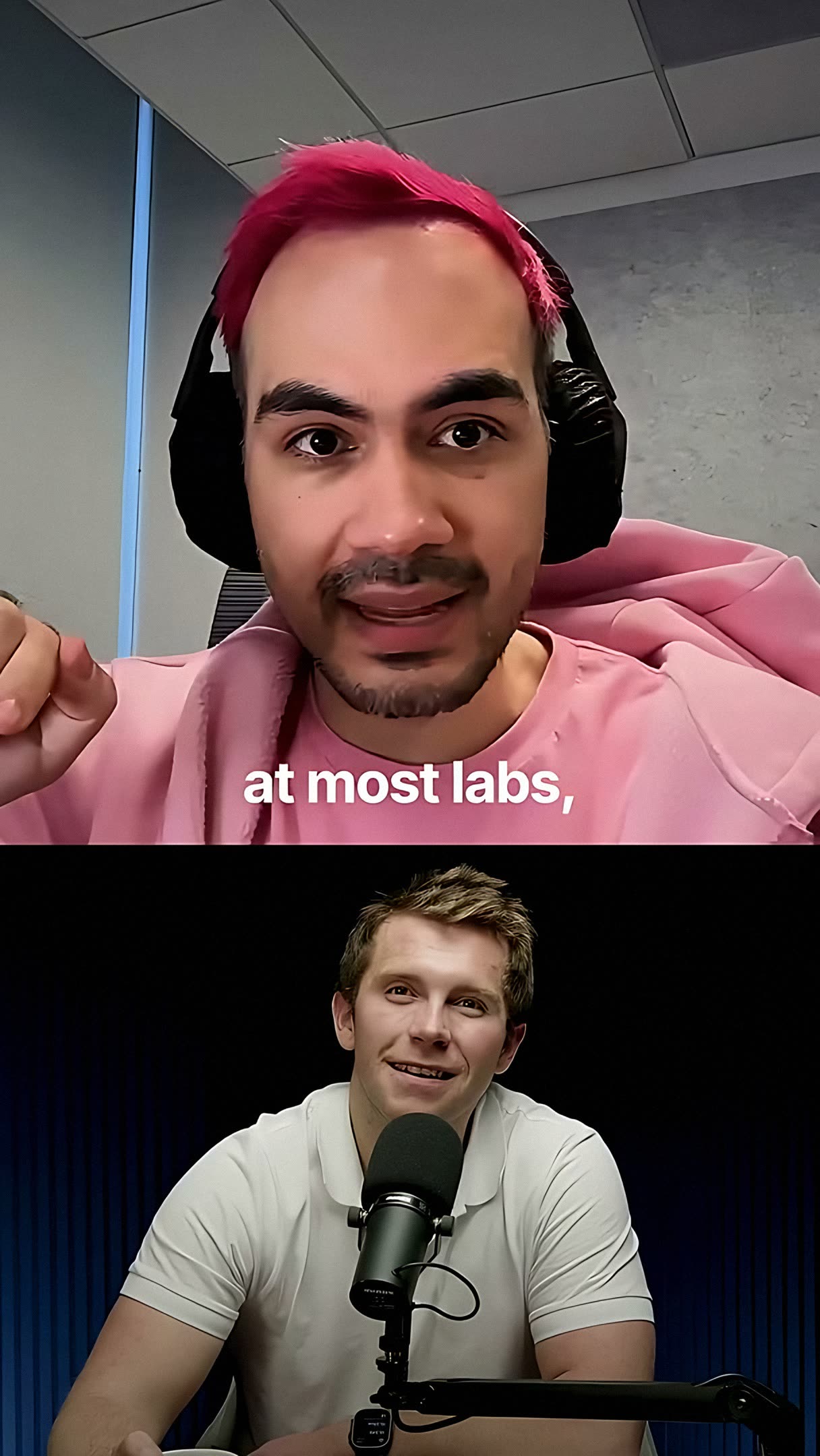
Diogo Almeida, founder and chief executive of TypeSafe AI, says he does not hire researchers from OpenAI. In a podcast clip, he argued that getting into OpenAI selects for people who share one particular set of beliefs, and that its researchers mostly enjoy working on algorithms (the methods a model uses to learn) and on scaling (making models bigger with more computing power). Almeida said they tend to dislike data, adding: "Data is a very low status thing at most labs".
He also said very few people there think hard about choosing the right task for a model, and that he would not hire those few either, because they already have a mission of their own. His example was Aditya, who he credits with turning text to image (making pictures from a written description) into a whole field at OpenAI. Such a person, he said, should keep working on their own idea. That leaves the researchers who mainly care about algorithms, and hiring them for his company would be, as Almeida put it, "the kind of thing to do when you want to throw money in the furnace". His own chosen task is what he calls machine native AI.
Almeida knows the lab from the inside. Digital Today reported that he spent 4 years and 6 months at OpenAI, where he helped develop GPT-4, InstructGPT and ChatGPT and worked on reinforcement learning from human feedback (a way of training models using people's ratings of their answers). TechCrunch reported that he left OpenAI to start TypeSafe AI, which has released Jev, a model that does not write text but gives back probabilities that the company calls calibrated decisions. Almeida told TechCrunch that the company bet early on producing all of its own training data, and that the bet was one of the best he has made.
Why it matters to your business
A famous employer on a CV is a weak signal for whether someone can solve your problem. Almeida's point is that the habits that win a place at a top lab can be the opposite of what a smaller business needs: patience with messy records, care about labels, and a clear view of the one job the system must do. Paying a premium salary for a big lab name can buy you skills you will not use, while the dull data work stays undone.
It also changes how you read the competition. A rival that hires expensive star researchers is not automatically ahead. For most companies using AI, results depend on the quality of their own data and on picking a narrow, useful task, and those are things a small team that knows its customers can do well at a fraction of the cost.
What to do in your business tomorrow
- Write down, in one sentence, the single task your next AI project must do well and list the data it will need, before you interview anyone for it.
- In your next AI hiring or supplier interview, ask the candidate to walk you through a past project where they cleaned or labelled messy data, not only one where they built a model.
More on this topic: AI agent news