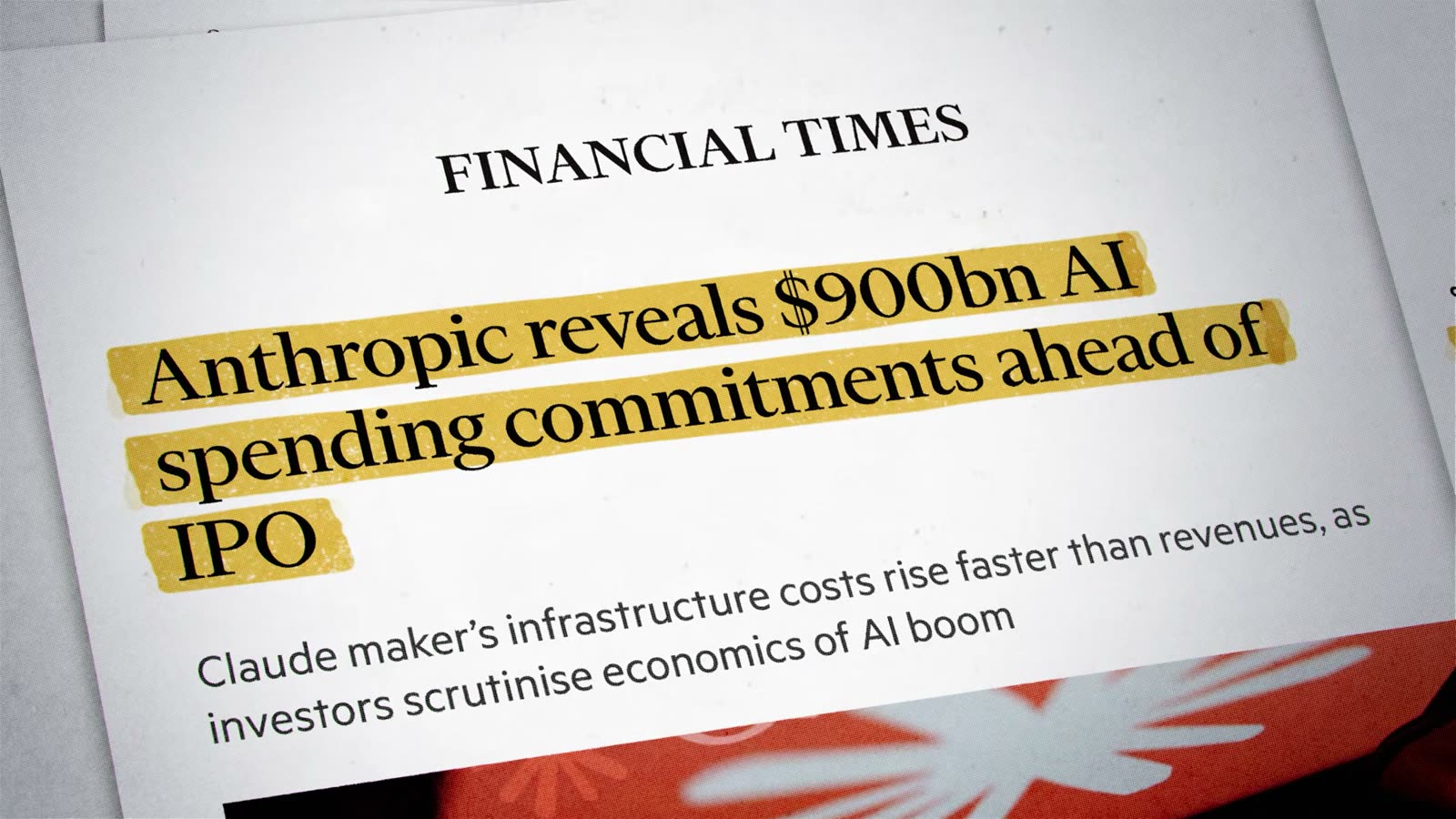
Think School asks why Anthropic has signed contracts worth $900 billion when, by its estimate, the company will make at best about $50 to $60 billion in 2026 and is still running at a loss. Its answer is that compute (the computing power that runs AI) is in shorter supply than anything else at the moment. Demand is so strong, the channel says, that chips are booked 12 to 18 months ahead, and it says Anthropic's own filing concedes that the company has, in the past, seriously misjudged how much compute it would need.
The channel admits the risk looks large. Against revenue of $33 billion in 9 months, it asks, what happens if customers do not come, or a cheaper and smarter model takes the work? The contracts cannot simply be torn up: roughly $715 billion of the total is fixed, the channel says, and has to be paid even if Anthropic never uses the compute. But Think School argues the number is less wild than it looks, because most of the $715 billion is spread over 5 to 10 years. If it runs over about 7 years, the channel works out, Anthropic might spend around $100 billion a year.
The figures reported from the filing differ from the channel's. InvestmentNews, reporting on an earlier confidential draft first seen by Reuters, put Anthropic's computing commitments at no less than $518 billion over the next decade, with about 80% payable regardless of use, and reported that the company argued future demand for advanced AI will be held back mainly by how much compute is available. Reuters reported that Anthropic leans on a handful of cloud companies, among them Amazon, Google and Microsoft, plus suppliers like Broadcom, to provide its computing power.
Why it matters to your business
AI capacity is scarce and booked well ahead. The firms that sell you AI are betting hundreds of billions that demand keeps rising, which tells you how much business use they expect. It also means that in busy periods capacity can run short.
Fixed bills that cannot be cancelled put pressure on a supplier to keep revenue rising. If growth slows, a company carrying that much fixed cost may change its prices or plans to protect itself, so the terms in your contract matter more than they first appear.
What to do in your business tomorrow
- Find out what your main AI supplier's service terms promise on uptime and usage limits, and note what would happen to your work if those limits were hit.
- Pick one important task that runs on AI and write down a fallback, either a manual method or a second tool, that your team could use for a week.
More on this topic: AI agents by industry