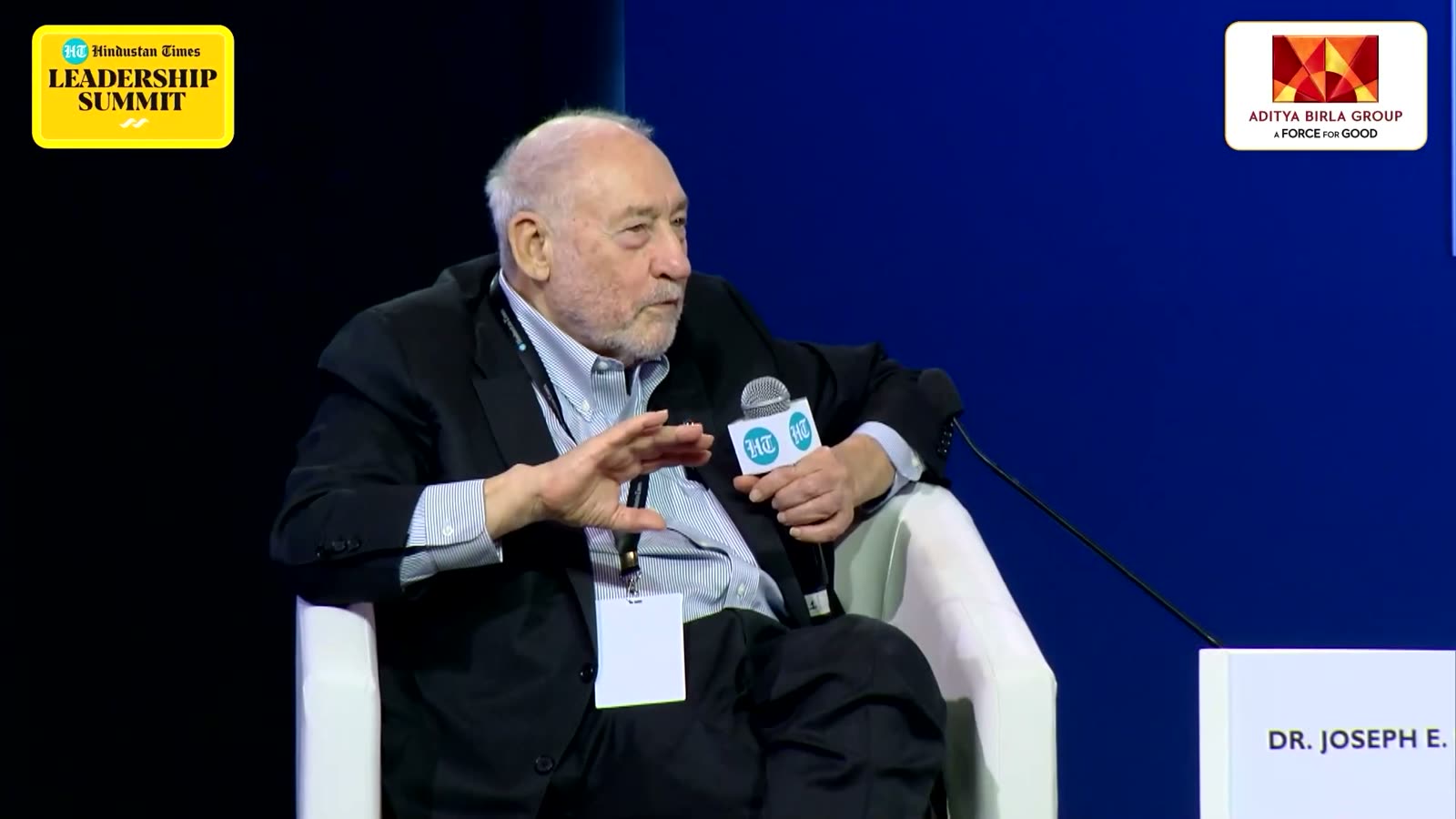
Joseph Stiglitz spent most of his talk at the Hindustan Times Leadership Summit 2026 on the dangers of AI, from a bubble that could break to machines replacing workers. In this clip, published by Mint, he turned the argument around. Suppose the technology works, he said, and suppose it can be regulated so that it is safe. He told the audience to put that second question to Stuart Russell, the next speaker. If both hold, Stiglitz said, "it has the potential of what I call superabundance".
In his account, superabundance means society becomes steadily more productive and can do things it could not afford before: good education and health care for everyone, cities that are easier to live in with less pollution, and a managed green transition (the move from fossil fuels to cleaner energy). He noted an awkward timing point: the need for workers may fall just as the green transition needs more of them. All of this is good news, he said, if it can be managed. That is the job of what Stiglitz calls a progressive AI agenda. Many of the investments it needs are public ones in education, health and the green transition. Private firms may carry them out, but government money and taxation would have to drive them forward.
Stiglitz won the Nobel Prize in economics and wrote The Road to Freedom, a book on the failures of modern capitalism, Fortune reported. He shared the 2001 Nobel prize and was chief economist of the World Bank, BigGo Finance reported in its account of the same summit, where he also argued that the US could tax the winners of AI to pay for his progressive agenda. Coverage of the summit carried by China Tech News said he warned that AI lacks a macroeconomic model (a picture of how it affects a whole economy) and urged India to invest more in education.
Why it matters to your business
Owners hear two loud stories about AI: that it is a bubble, and that it will make everyone rich. Stiglitz holds both at once. The productivity gains are real in his view, but who captures them depends on choices made now, by governments on tax and public spending and by firms on how they use the time AI frees up. A business that treats AI only as a way to cut headcount is betting on the narrow version of that future.
His list of winners is also a list of markets. Education, health, liveable cities and the shift to clean energy are where he expects public money to flow if his agenda is adopted. Suppliers, contractors and service firms in those areas could see more demand, and more competition for skilled staff, at the same time that routine office work gets cheaper to do.
What to do in your business tomorrow
- Write down one task in your business where AI could save your team several hours a week, and decide now what that time will be spent on instead.
- Check whether any of your products or services sell into education, health care, city services or clean energy, and note which public budgets they depend on.
More on this topic: AI agents by industry
Sources
- Mint: Nobel-Winning Economist Warns Of 'Classic Demand Problem': Who Will Buy AI If Jobs Are Gone?
- Fortune: Joseph Stiglitz says buckle up before the great AI reallocation era arrives
- BigGo Finance: Stiglitz says AI bubble will burst and India's services export boom is most exposed
- China Tech News: Stiglitz at the Hindustan Times Leadership Summit