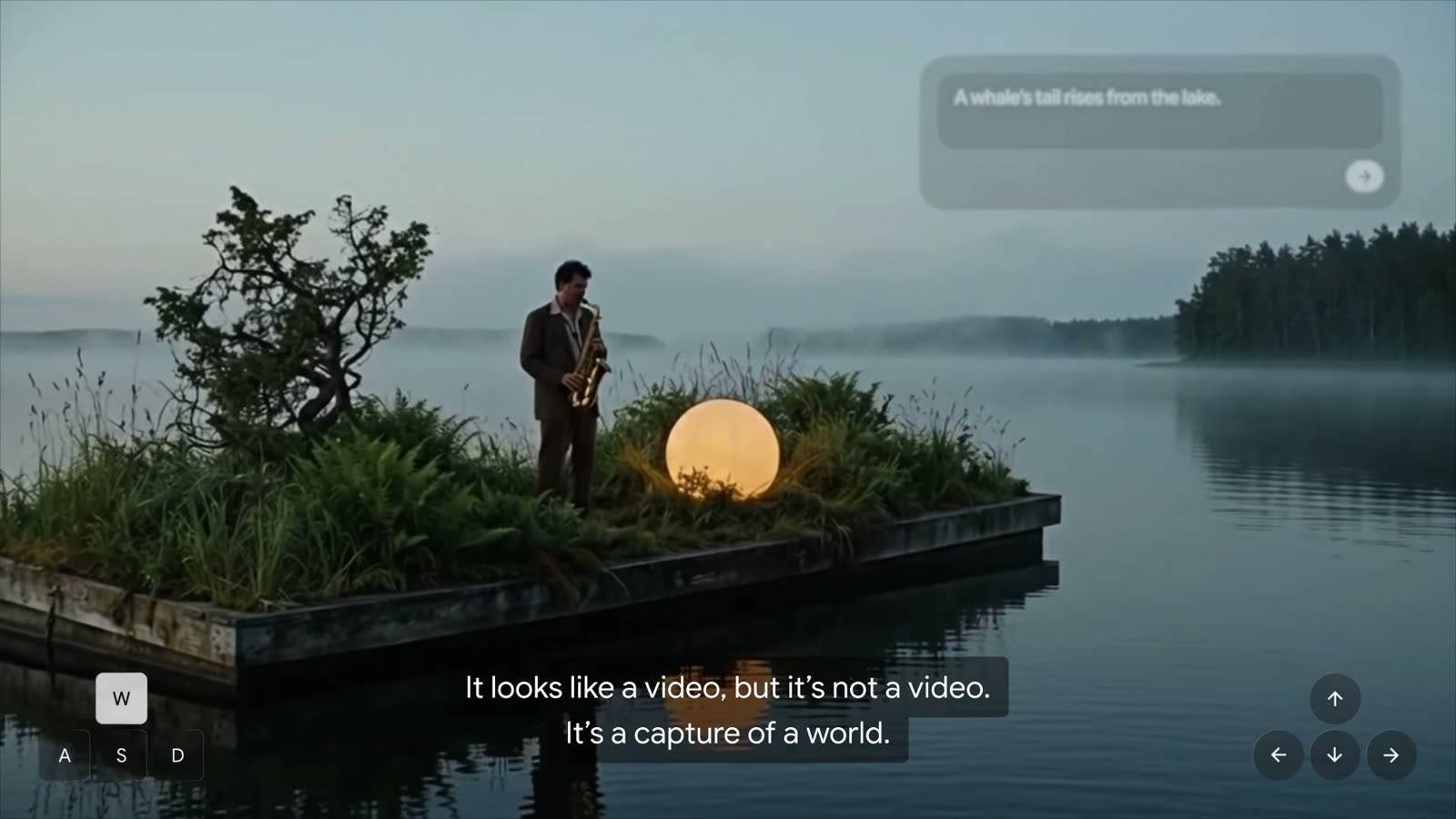
In a behind the scenes film, Special Guest X, a studio based in Spain and Google DeepMind's creative partner, explains how it worked with Genie 4, the company's new world model (an AI that simulates a place you can move through in real time, rather than making a fixed clip). The team describes what it wants, and within seconds Genie produces a world, which they then move around using the arrow keys.
They also prompt while the scene is running, for example asking for a jump to a close-up, so they can direct the action as it happens. Inside Project Genie they talked to a built-in agent (an AI helper that carries out tasks for you) to create small apps with custom actions, dialogue and events. The main lesson from Special Guest X was about consistency: to keep control of a character and a setting, it is "fundamental to repeat the thing that you want to do", the team said. They describe the result as a simulation of reality, not a video.
Genie 4 lets users type prompts mid-simulation to change the scene and can keep a scene consistent for up to two minutes, TechCrunch reported. Early testers point to prototyping films as a use, and a Google DeepMind engineer said the real time element is most valuable in the ideation and storyboarding phase. The team also admits details can drift the longer a simulation runs. During early testing, teams in filmmaking used it for quick pre-visualisation of scenes (a rough draft of a shot before filming), OfficeChai reported, and everything it makes carries SynthID, Google's watermark for content made by AI.
Why it matters to your business
Making a scene for a product demo, a training session or an advert usually means a shoot, a set or an animation studio. If a sentence can produce a scene you can walk through and direct live, the cost of trying an idea at the storyboard stage drops from days to minutes. That is exactly where Google's own engineers say the tool helps most, so treat it as a fast way to test and reject ideas, not as finished footage.
The studio's advice to repeat the same prompt to keep things consistent means the skill that matters is writing clear, reusable instructions, not owning expensive kit. Small studios that sell rough scenes by the hour face new competition, while firms that need a lot of visual material, from training to marketing, stand to save money. Because scenes drift after a couple of minutes, plan for short drafts.
What to do in your business tomorrow
- List the three visuals your business pays most to produce, such as a demo, a walk-through or a training scene, and write a one paragraph description of each that you could reuse word for word.
- Ask whoever makes your adverts or videos how a live, steerable draft at the storyboard stage could change the next project, and what it might save.
More on this topic: AI agent tools