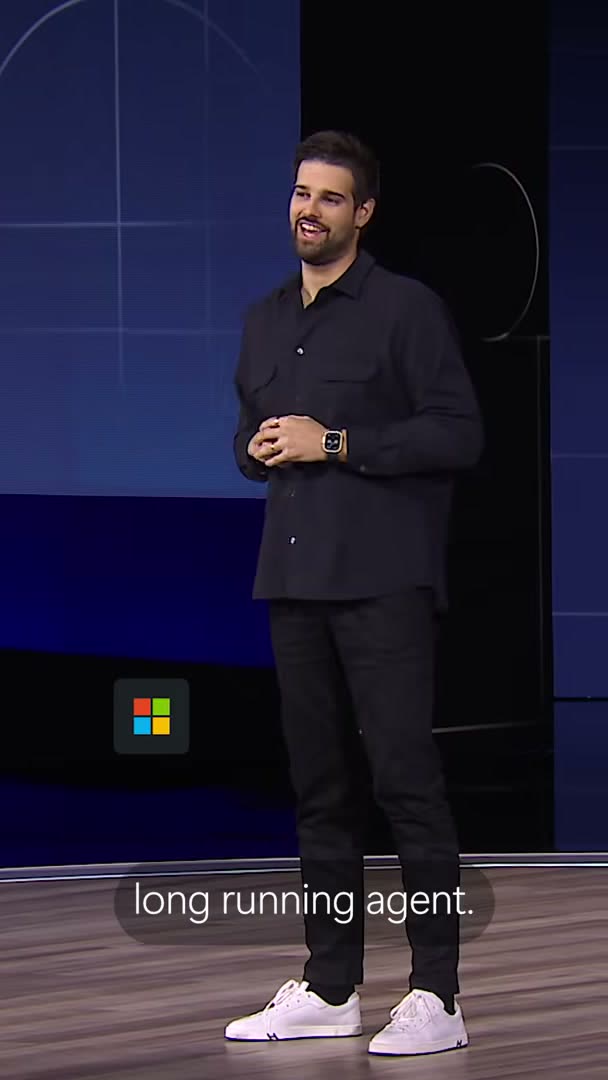
Jacob Andreou, who runs Copilot at Microsoft, used Microsoft Ignite to present Autopilot, which he called your digital teammate. He described it as "the first ever enterprise grade long-running agent" (an AI program that keeps working on a task over hours or days rather than answering one question). He said it lives inside a company's own tenant (its private Microsoft account and data), with its own identity, memory, email and computer.
Because it has its own computer, Andreou said, Autopilot is not limited to Microsoft's own apps and can also use the older software a business already runs on. It can watch channels, follow up on threads and push recurring work forward, "even while you sleep", in Andreou's words. He also announced Workspaces, which Satya Nadella showed in his keynote, as the place where people and AI work side by side and where Autopilots come to life.
Andreou leads the Copilot experience for both consumer and business products. Digit reported that he joined Microsoft as an executive vice president reporting directly to chief executive Satya Nadella, after working at Snap, the company behind Snapchat, where he was a senior vice president. ITdaily reported that Autopilot is the new name for Scout, which Microsoft first showed at Build. Each Autopilot gets its own Entra Agent ID (a managed identity, like a staff login) and a named human manager, IT teams can restrict or block what it can reach, and its actions are logged under the agent's name. The outlet said Workspaces replaces Copilot Notebooks, that both products are only in Frontier, Microsoft's early access programme, for now, and that Autopilot is charged by usage through Copilot Credits on top of the normal licence.
Why it matters to your business
An agent with its own login, inbox and computer changes the question from which tool to buy to which jobs to hand over. Recurring follow ups, status chasing and checks across old systems that never got proper links are exactly the work that eats a manager's week. If an agent can do that overnight, a small team can cover more ground without new hires, and work that used to wait for office hours keeps moving.
It also brings new costs and risks. Usage based billing means the bill grows with every task the agent takes on, and the real cost may only show once it is running. An agent that can act inside your systems needs the same care as a new employee: a clear manager, limited access to start with, and a log of what it did. Firms that set those rules early will find it easier to trust agents with more.
What to do in your business tomorrow
- List five recurring follow up tasks your team does every week, note which older systems each one touches, and mark the two you would hand to an agent first.
- Write a one page rule for any AI agent in your business: who manages it, what it can open, what it must ask a person before doing, and a monthly spending cap.
More on this topic: AI agent tools