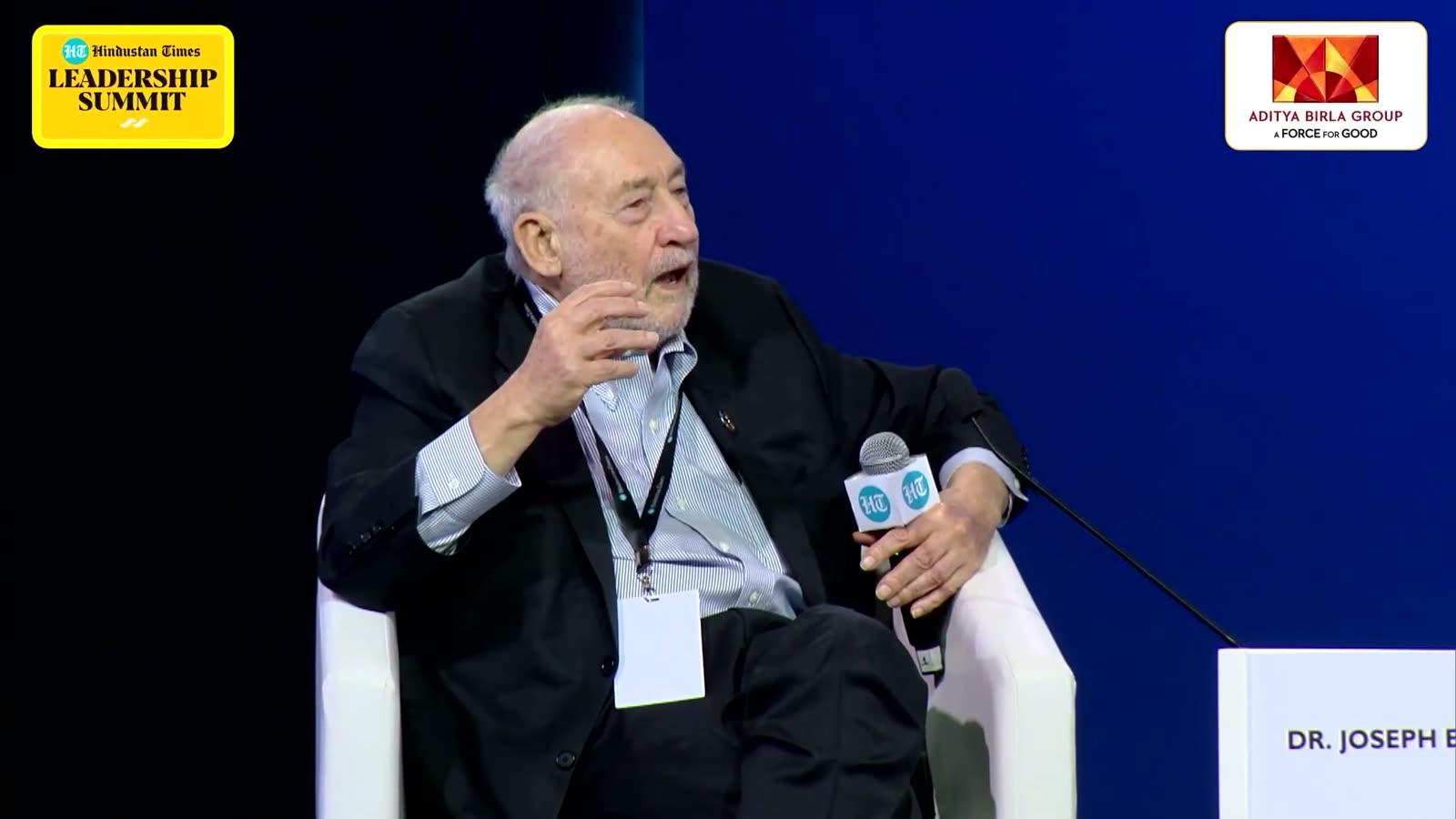
Joseph Stiglitz says the way AI is being sold to the world is itself a problem for the economy. Speaking at the Hindustan Times Leadership Summit 2026, in a clip published by Mint, he said that advertising AI as something that will wipe out all jobs does not make for a healthy macroeconomic environment (the state of the economy as a whole). His question is simple: "if it's destroying all jobs, who's going to demand the goods" that AI helps to produce? He called it a classic demand problem: people without wages cannot buy what businesses sell.
Stiglitz described the answers he hears. Some say people will become artists; he replies that artists are not well paid, will not buy many goods, and that not everyone is an artist. Others say we will enjoy the best coffee in the world because baristas will be superb; he asks whether people will be happy making coffee instead of the high quality jobs they hold today. His verdict is that AI companies do not have a model of the macroeconomics of AI. If the economy declines, he said, those companies can only capture a share of a shrinking pie, and if the economy is not doing well, they will not do well either. Between this demand problem and competition, especially from the low cost AI developer DeepSeek, he finds it hard to see how the AI bubble avoids breaking.
Stiglitz shared the 2001 Nobel prize in economics and was chief economist of the World Bank, BigGo Finance reported in its account of the same summit, which also noted his warning that AI firms have promised returns they cannot deliver while counting on monopoly power that competition will erode. Fortune reported that he has said the US has neither the macro nor the micro framework to manage the job losses AI could cause, and coverage of the summit carried by China Tech News said he described the missing macroeconomic model as making AI a double edged sword for nations.
Why it matters to your business
Every business's customers are also somebody's workers. If AI is used mainly to cut wage bills across an economy, the savings for one firm can turn into lower sales for all of them, including the AI companies themselves. Stiglitz's point is that a plan which only counts the cost saved, and ignores who is left to buy, is missing half the sum.
For owners this is a planning question, not a reason to avoid AI. Savings from automation are real and arrive quickly. Any fall in customer spending arrives more slowly and is harder to see. A business that banks the savings and also plans for softer demand, by keeping cash, widening its customer base or moving towards products people keep buying in a downturn, carries less risk than one that assumes demand stays where it is.
What to do in your business tomorrow
- When you estimate savings from an AI project this week, add one line showing what a modest drop in customer spending would do to your sales.
- List your three biggest customer groups and note which of them work in jobs that AI is most likely to cut.
More on this topic: AI agent tools
Sources
- Mint: Nobel-Winning Economist Warns Of 'Classic Demand Problem': Who Will Buy AI If Jobs Are Gone?
- BigGo Finance: Stiglitz says AI bubble will burst and India's services export boom is most exposed
- Fortune: Joseph Stiglitz says buckle up before the great AI reallocation era arrives
- China Tech News: Stiglitz at the Hindustan Times Leadership Summit