The short version
Speakers at the Ogun Digital Summit in Abeokuta, Nigeria, told workers and founders to learn AI tools or lose ground to people who do. Its hackathon shared ₦5 million among three finalists, and an AI classroom took the top prize.
What happened
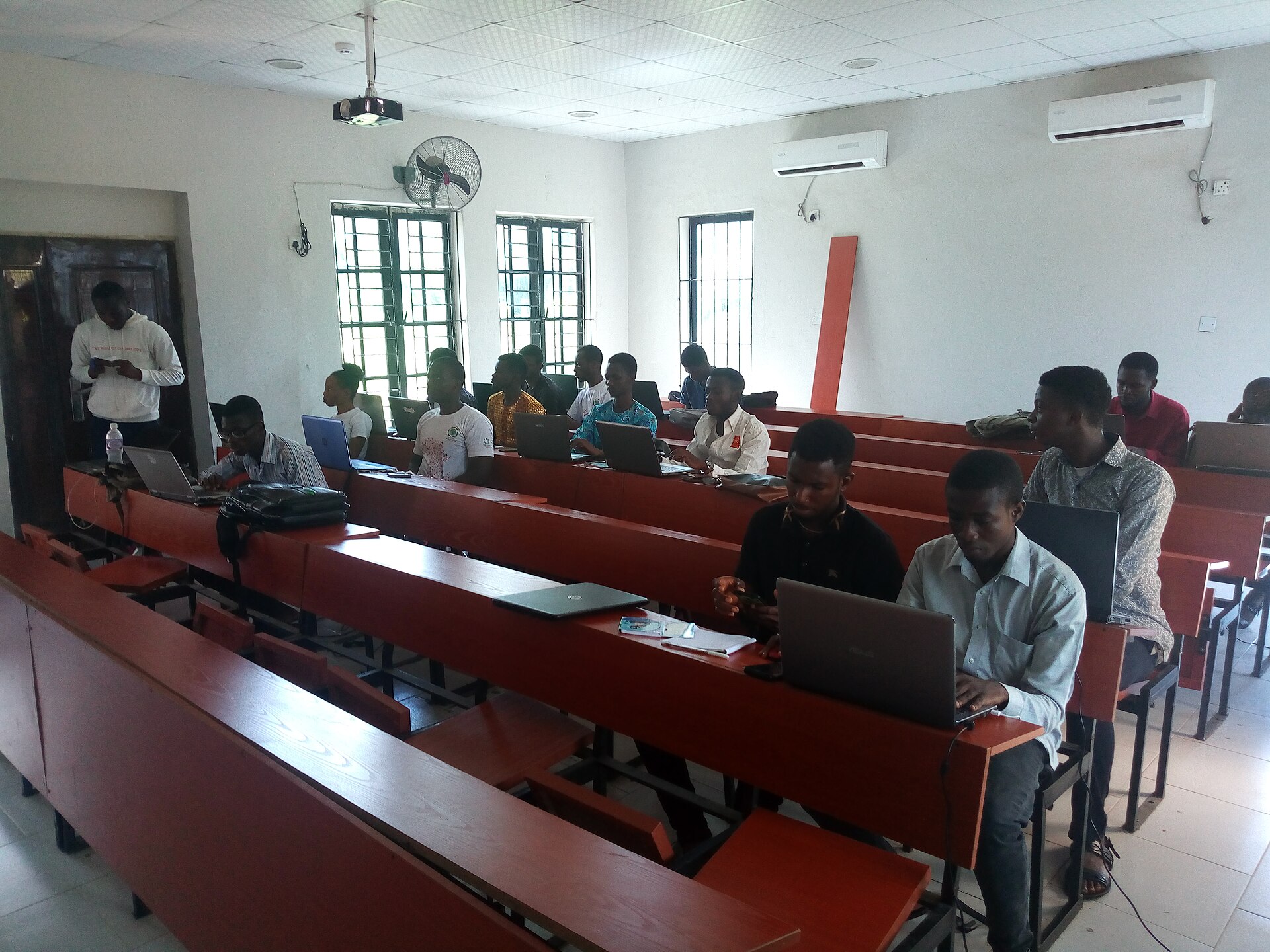
Abeokuta's June 12 Cultural Centre hosted the Ogun Digital Summit on November 26, a Thursday, according to Technext. It drew technology entrepreneurs, investors and policymakers. The talks covered AI and how startups raise money, among other subjects.
Fola Olatunji-David, founding partner at Kickoff Africa, gave the opening keynote. He pushed back on the idea that AI is mainly a threat to jobs. Olatunji-David told the room: “AI is not a doomsday replacement. It is a tool.” In his telling, work goes to whoever has learned to handle it.
Victor Adeleye, who convenes the summit, said tools such as ChatGPT and Claude are now easy to reach. That, he said, shrinks the advantage some technical skills used to bring. He expects initiative, critical thinking, clear communication and professional relationships to matter more as AI does more of the technical work.
The summit's hackathon, a contest where teams build a working product in a short time, gave three finalists a combined ₦5 million, Technext reported. Capriko won ₦2.5 million for an AI-powered live virtual classroom. Vital Tag took ₦1.5 million for a device that warns farmers of animal health problems, which its developers say can spot signs up to 72 hours before symptoms show. Maths Genius received ₦1 million for an AI teaching tool for maths.
The background
Organisers opened applications for the hackathon earlier, Innovation Village reported. It said winners would also get cloud computing credits, workspace and an eight-week mentorship programme. Teams of two to five people could enter in six areas, including financial technology, healthcare, agricultural technology and AI.
Adeleye has pointed to access to resources and networks as a hurdle for young talent outside the established tech scene in Lagos, according to Innovation Village. The summit has run since 2020. Technext said one startup incubated in Abeokuta, MeloLearn AI, has won a $4,000 grant and already earns recurring revenue.
Separately, Olayinka James, founder of AURÄI, an AI assurance company, made a similar point to Nairametrics. He said firms adopting AI should retrain staff for new roles rather than treat the technology only as a way to cut headcount. He expects demand for people who can monitor, audit and validate automated work.
Outside Nigeria, HR Dive reported research by Indeed covering more than 1,000 job seekers and 300 hiring decision-makers. It found 31% of employers expect AI fluency to become a must for nearly every job inside two years. HR Dive also cited a study by Aon in which 88% of employers thought their staff would need new skills because of AI.
What it means for owners and operators
For an owner, the message from Abeokuta is about hiring and training, not about buying software. If a chatbot can now do part of a technical task, the skill you paid a premium for is easier to find. What gets scarcer is the person who spots the right problem, checks the answer and explains it to a customer.
For a founder outside the big cities, the hackathon results carry a second point. The winning ideas were small and local: a classroom, a farm device, a maths tutor. The investors at the summit, Technext reported, also said venture capital is neither needed by every business nor a promise of success.
The AI angle
The AI link here is direct. Two of the three winning projects are AI products, and both teach: one runs a live class online, the other walks students through maths. They show AI being used to deliver a service that was short of skilled people, which is how many small firms will first meet it.
The other link is in the speeches. Adeleye named ChatGPT and Claude as the tools flattening the value of some technical skills. James, speaking to Nairametrics, said AI agents (software that carries out tasks by itself) could take on many kinds of task, and that people will still be needed to supervise them and judge their decisions. Put together, the work that grows is checking what the AI produced.
Our take
Our view, drawn from the reporting in this story. It is analysis, not news.
Our view: the useful warning from Ogun is that easy AI tools change what you should pay for, not only what you can automate. A business that keeps hiring for the old technical skill alone is buying something that is getting cheaper everywhere.
The research from outside Nigeria points the same way. When 31% of employers expect AI fluency in nearly every job, and 88% see new skills coming, the gap will not close by itself. The firms that do well will be the ones that name who checks the chatbot's work and train that person first. That holds for a small shop as much as for a bank.
The numbers
What to do in your business tomorrow
- Pick one technical task this week that a chatbot now does well enough, and name the one person who checks its answer before it reaches a customer.
- Give two of your team the same real task this week, one with a chatbot and one without, and count it a pass only if the chatbot version needs no correction from you.
- Add one line to your next job advert naming the everyday chatbot skill the role needs, so every hire from now on is tested on it at interview.
Related coverage
Sources
- Technext: Ogun Digital Summit calls for greater AI literacy to drive innovation in Nigeria
- Innovation Village: Nigerian Tech Innovators Can Win ₦2.5m in Ogun Hackathon
- Nairametrics: AI will not replace workers who learn to govern it, Olayinka James
- HR Dive: Managers say they don't feel ready to lead an AI-fluent workforce