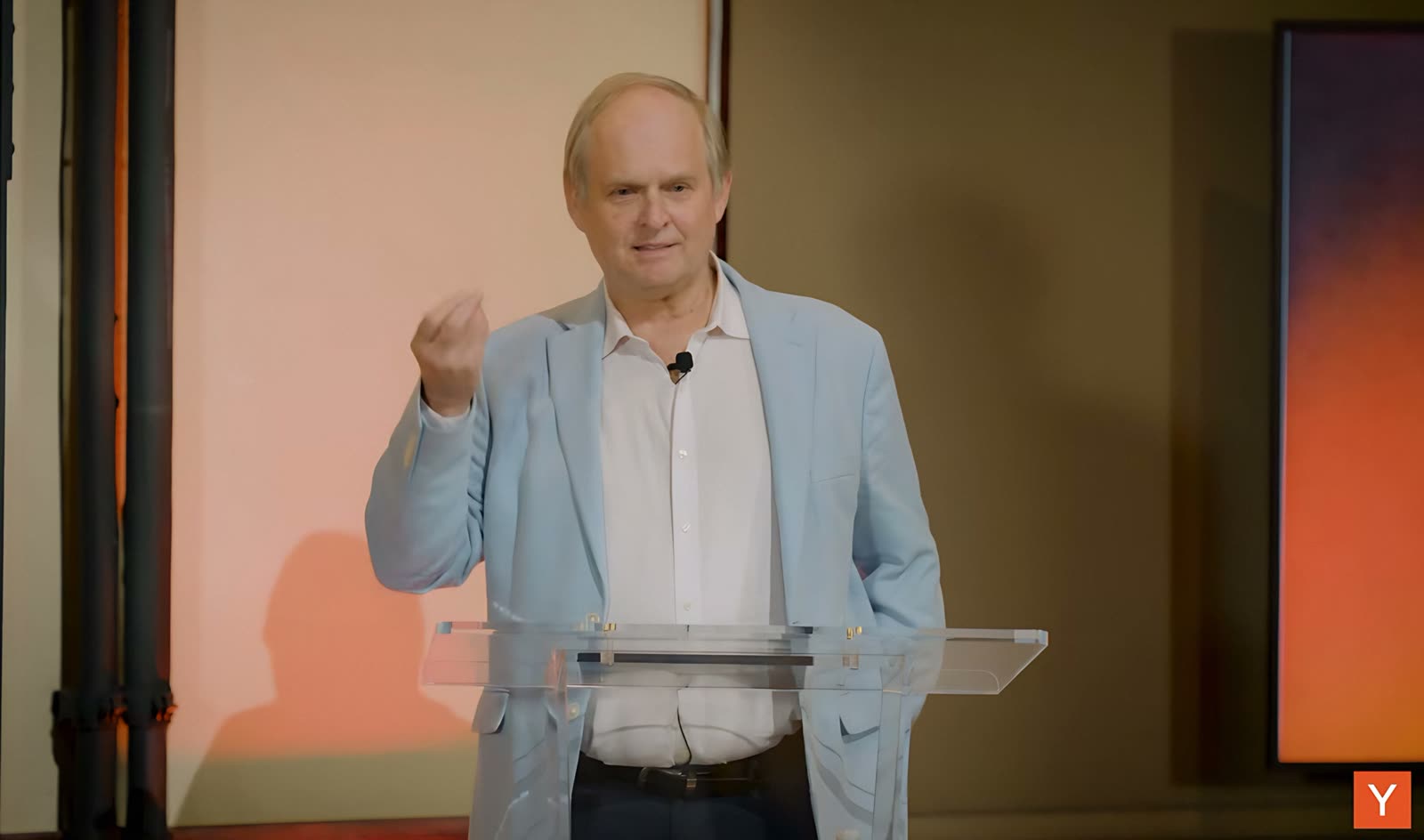
Opening his case at Y Combinator's debate on slowing down AI, Robin Hanson attacked the idea of superintelligence as a single, one dimensional quantity. In economic history, he said, that simple picture of technology has repeatedly misled forecasters. When the steam engine, electricity and the personal computer arrived, people expected them to spread and make an impact far faster than they did, because many other parts of society had to be rebuilt first. That typically held back the payoff for decades.
Even if an AI writes lots of code for the lab that built it, Hanson said, that covers a small set of dimensions in a large economy, and nobody will suddenly gain half of GDP (the total value of what an economy produces) from a faster compiler (the program that turns code into working software). People do not just need general intelligence; they spend a long time learning many tasks in context, and AI will have to do the same. In Hanson's words, "Just because it's smart doesn't mean it suddenly can do everything".
He expects a long delay before AI spreads through the economy and thinks that is fine. Societies mostly adapt by watching for things to go wrong and changing course, he said, and AI is one of the most closely watched technologies, so slow, gradual adoption would let people react.
Hanson is an economist at George Mason University, Scientific American reported. He told The Blaze that he quit his physics studies in his twenties to do AI research in Silicon Valley for nine years.
Why it matters to your business
Hanson's history lesson is a practical one. The gains from a new technology rarely come from buying it; they come from changing how the business around it works. Electricity paid off only once much else had been rebuilt around it, he argued, and AI is likely to pay off the same way, one process at a time.
That cuts two ways for owners. There is less need to panic about being left behind in a single year, but the firms that start redesigning their workflows now will be ahead when the payoff arrives. Learning a task in context takes time for people and, Hanson says, for AI too.
What to do in your business tomorrow
- Map one process from start to finish and mark every step that would have to change for an AI tool to take part, not just the step it would do.
- Pick the smallest of those changes and make it this week.
More on this topic: AI agent news