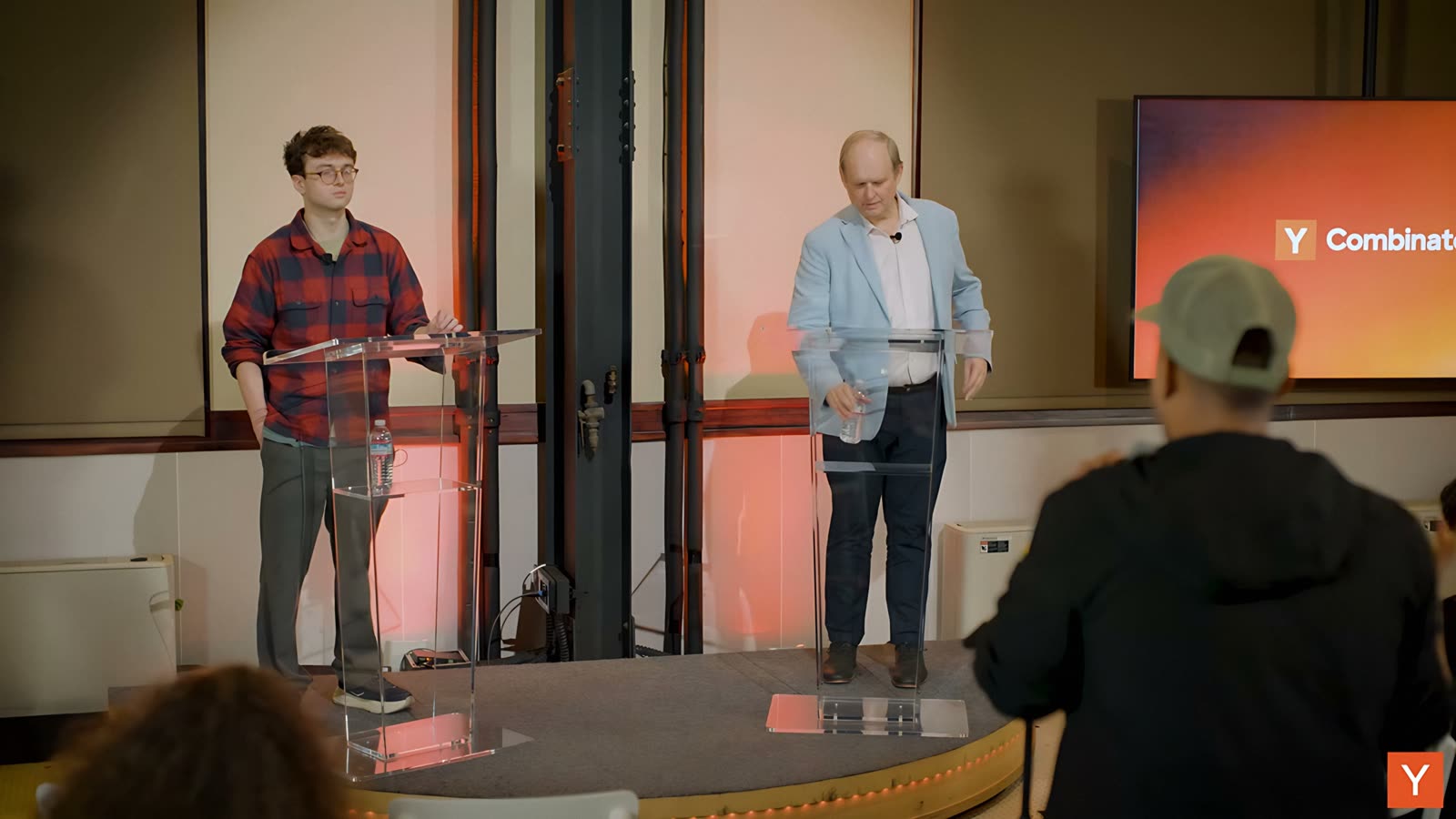
During question time at Y Combinator's debate on slowing down AI, an audience member who said their company puts robots onto real work sites described a gap. They film people doing the job around the clock, but the footage does not show what workers get wrong, which rules apply or where limits are needed. So an expert has to set guardrails (hard limits on what a machine may do) live while the robots are working.
They said they had tried models from frontier labs (the companies building the most advanced AI) and the robots made many mistakes. In one test, asked to combine two chemicals that are dangerous together, the robot did it. If neither the labs nor government understand such specialised uses, they asked, who should regulate them: the end customer, the firm that deploys the robot, or some chain of both?
Robin Hanson replied "For a great many small problems in the world, regulation isn't the answer". His answer was liability (legal responsibility to pay for harm): make sure whoever is in charge carries the cost of what goes wrong, and they will decide how much risk to take and which precautions are worth it.
Hanson is an economist at George Mason University, Scientific American reported, and the author of The Age of Em, a book about a future shaped by artificial intelligence. He told The Blaze that as a young physics student he left his studies to do AI research in Silicon Valley for nine years.
Why it matters to your business
General AI models do not arrive knowing the safety rules of your site, kitchen, warehouse or lab. If a tool you deploy takes a dangerous action because someone asked it to, Hanson's view is that the cost should land on whoever is in charge, and often that is the business using it, not the lab that built the model.
That turns safety into a business decision with a price. Firms that write down what their AI must never do, and check for it, spend a little time now and avoid paying for accidents, claims and lost customers later. Large customers may well ask how you control these tools before they sign.
What to do in your business tomorrow
- Write down three actions an AI tool must never take in your operation, and name the person who checks for them each week.
- Ask your insurer or broker whether your current cover includes harm caused by AI tools your staff use.
More on this topic: AI agent tools