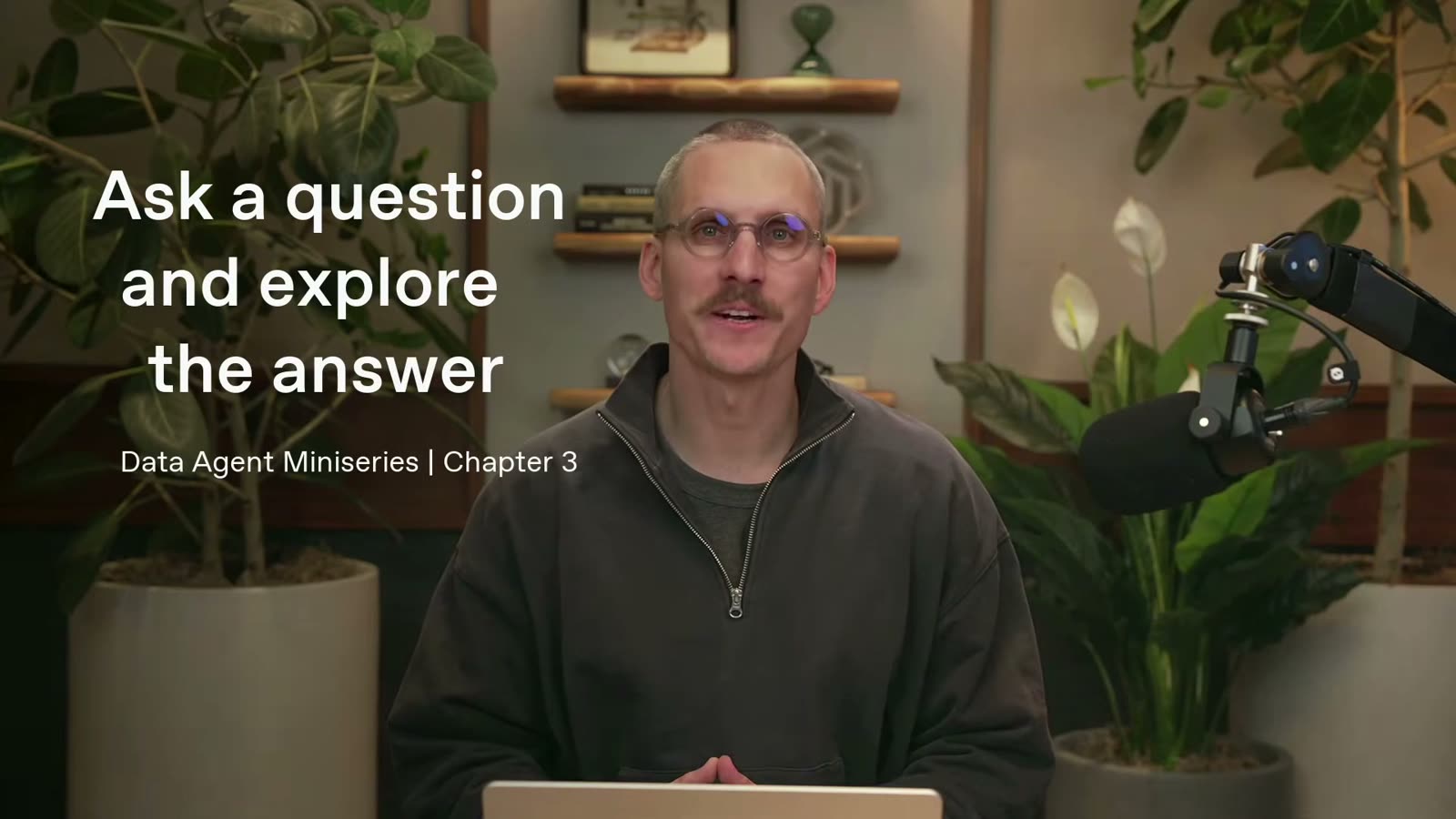
In a walkthrough of just under a minute and a half, OpenAI shows a manager getting ready for a team meeting about last quarter. The figures come from Acme, a made-up company used for the demonstration. The manager simply asks ChatGPT how the business is doing. The narrator describes the tool as something that could be "your on-demand data agent, answering your data questions whenever you need it." An agent here means AI software that carries out a task with several steps on your behalf, rather than giving a single reply.
In the clip, ChatGPT reports that sales rose by roughly 20%, draws a chart showing that industrial manufacturing produced most of that growth, and then names three customers that need attention, one of which has a clear problem when its October orders are set against its average for the third quarter. A panel at the side of the screen shows which data sources it chose to read. Finally it turns the findings into a three-slide presentation with the headline figures, recommended actions and supporting charts.
The feature shown is the Data plugin (an add-on that gives ChatGPT a new skill) inside ChatGPT Work, the version of ChatGPT built for businesses. According to XDA Developers, it can draw on approved company data held in services such as Snowflake, Google BigQuery, Databricks and Amazon Redshift, as well as files kept in Google Drive and SharePoint. Data Studios reports that workspace administrators choose which connections are available and which roles or groups may use them, and that queries follow the access limits already set on the connected account, down to individual tables, rows and columns where those controls exist.
Why it matters to your business
Before a sales meeting, someone usually has to pull the numbers, find out what moved and build the slides. In many growing businesses that is a request to an analyst and a wait of a day or more. If a tool like this gives reliable answers on real company data, the person running the meeting can get a first answer in minutes. That changes what analysts spend their days on, and it changes how many a business needs to hire as it grows.
The risk moves with it. A confident chart built on messy, duplicated or out-of-date figures is still wrong, and it is now easier to believe. Neither report gives any measure of how often the answers are correct. So the businesses that gain first will be those whose data is already tidy and connected, with someone who knows where each number comes from. Firms whose figures live in scattered spreadsheets will get fast answers they cannot fully trust.
What to do in your business tomorrow
- Take one question your team answered for you before the last sales meeting, and write down how long it took and which systems held the figures.
- Ask whoever owns your sales data which single report would be wrong if two systems disagreed, and fix that one first.
- Try asking an AI assistant last month's headline sales question on a copy of your own figures, then check its answer line by line against your finance team's number.
More on this topic: AI agent news
Sources
- OpenAI: Ask Questions About Your Data in ChatGPT
- XDA Developers: OpenAI reveals its new Data agent for ChatGPT Work to make your job a lot easier
- Data Studios: OpenAI launches Data agent in ChatGPT Work: BigQuery, Snowflake, Databricks, and interactive dashboards
- Crypto Briefing: ChatGPT Work introduces Data agent for insights and dashboards