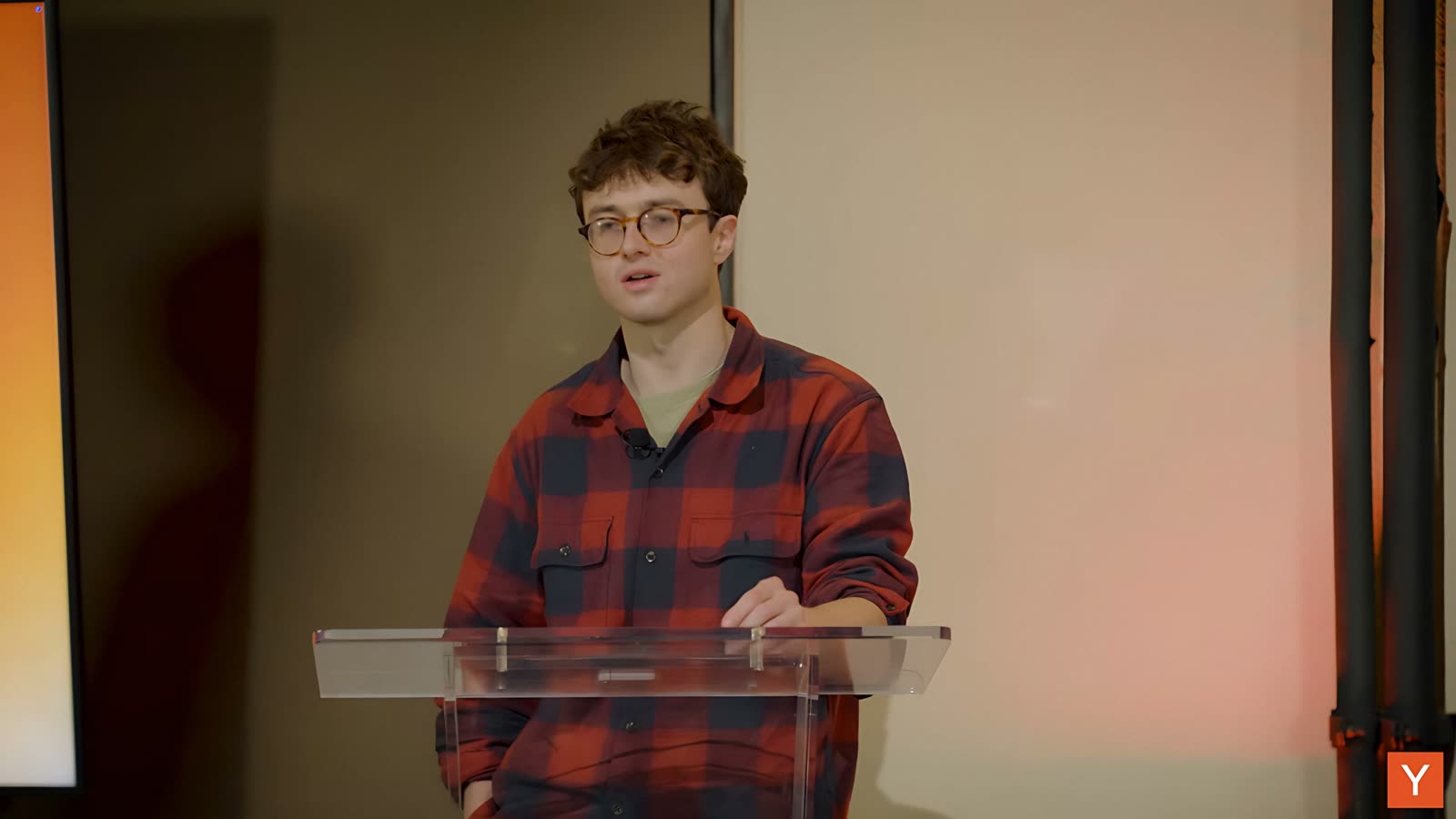
Jacob Coxon used his closing statement at a Y Combinator debate on whether to slow down AI to say this boom feels different from earlier ones. In past waves, he said, only narrow groups such as chess players had reason to feel spooked. Now friends of his who write code, teach at high schools or work as graphic designers can all sense it arriving.
His example was maths. Around four years ago, he said, it seemed a decade off for AI to solve IMO problems (questions from the hardest maths contest for school pupils), yet that came two years later. A Millennium Prize problem (one of the most famous unsolved questions in maths) then felt just as distant, and he said that is now here too. Coxon said "mathematicians are in shock at the moment at how fast this has happened". He expects automated AI research in 2027 and AI doing all the jobs in 2028, and argued "we ought to slow down before that happens".
A British mathematician, Coxon was educated at the University of Cambridge and did pretraining research (the first and largest stage of building an AI model) at OpenAI and then Anthropic, IBTimes UK reported. He resigned from Anthropic after roughly four months, saying on X that both companies were racing towards self-improving superintelligence, the Associated Press reported.
Why it matters to your business
Coxon's point is about speed. Each time a hard task looked years away, he said, it arrived sooner than expected. For a business, that means a plan resting on the idea that AI cannot handle a certain job can go out of date within a year or two, and a competitor who tests again sooner may get the savings first.
His dates are a forecast from one side of a debate, not a settled fact. The sensible middle path is to check your assumptions often and cheaply, so you neither bet the business on a date nor get caught out if progress keeps outrunning what people predicted. Cheap, regular tests cost an afternoon; being a year late can cost customers.
What to do in your business tomorrow
- Pick one task your team decided AI could not do last year, run it through a current AI tool this week using real examples, and write down what it got right and what it got wrong.
More on this topic: AI agent news