The short version
Jensen Huang has stepped down as Nvidia's CEO, and the AI cloud companies that lean on Nvidia's money and guarantees took the sharpest fall. For a business that rents AI computing or uses AI tools built on it, the risk now sits one step back in the supply chain.
What happened
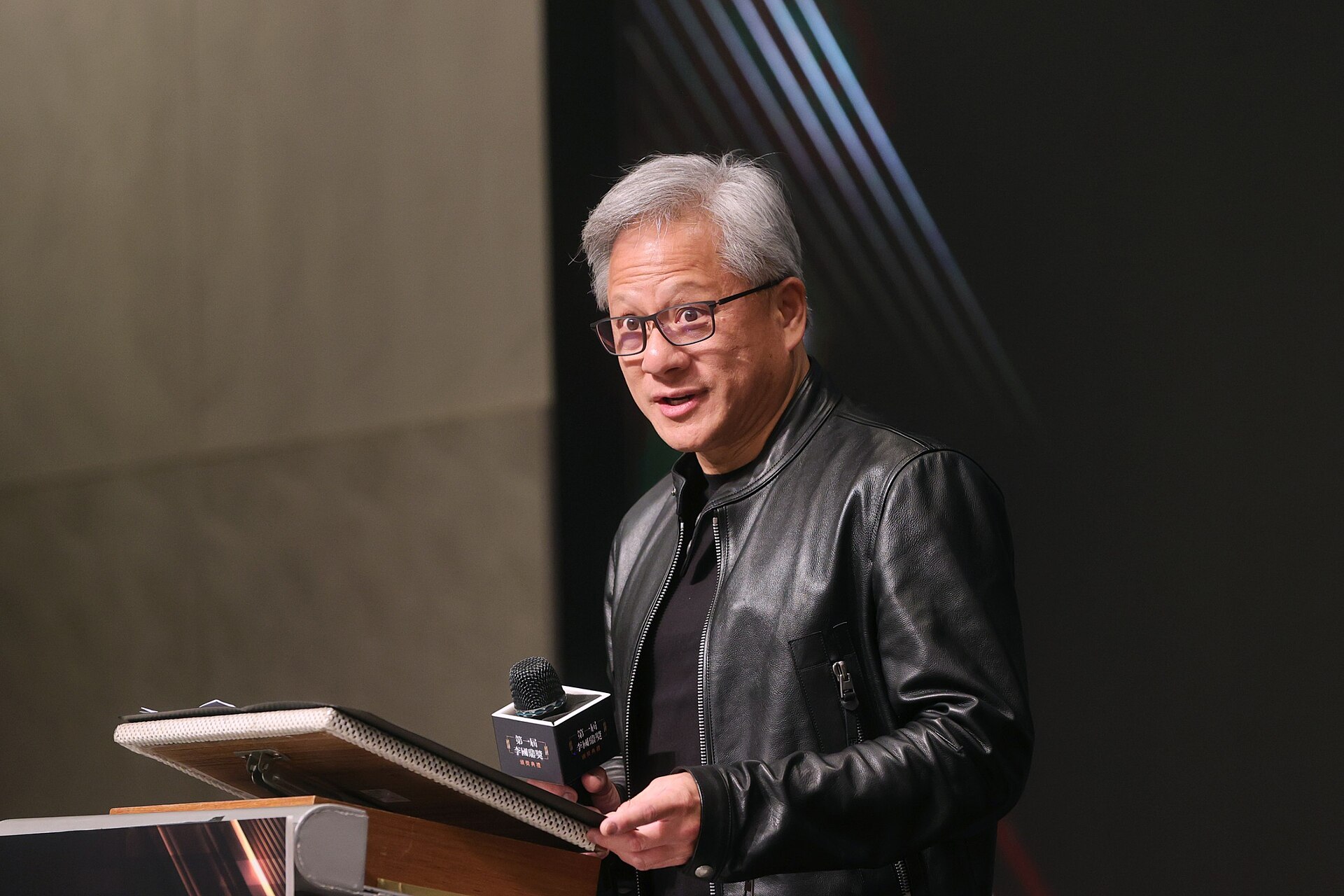
Nvidia said on Thursday that Huang had resigned as president, CEO and member of the board, with immediate effect. According to Fortune, the exit followed his admission of an extramarital affair and a board investigation. TechCrunch reports the board accepted the resignation on Wednesday. Colette Kress, the chief financial officer, is interim CEO and keeps her finance role, and Harvey C. Jones, a former Synopsys CEO, becomes the first chair of the board.
TechCrunch reports Nvidia stock fell close to 12% in early Thursday trading, and that since Friday the stock had fallen by as much as 19%, wiping out more than $855 billion of market value.
The companies hit hardest were the neoclouds. TechCrunch reports CoreWeave was down about 9% on Thursday, undoing some of Wednesday's 25% rally, while Nebius was down about 16% and IREN fell 6.6%. Khaleej Times, carrying earlier trading figures, had CoreWeave down 13.6% and Nebius down 20%, and notes Nebius had just said its 2026 revenue would land at the low end of its forecast.
The background
Neoclouds such as CoreWeave and Nebius buy Nvidia chips by the hundreds of thousands, put them in data centres and rent the computing out to AI labs and other companies, Fortune explains. Nvidia is also their backer. It invested $2 billion in CoreWeave in January and $2 billion in Nebius in March, according to TechCrunch, and holds $36 billion in cloud service commitments, deals in which it agrees to buy computing from these operators.
Fortune reports that in July Nvidia began offering to take spare computing off its neocloud partners' hands at a set price, giving banks a floor that encourages lending. Joe Kaiser of Switchyard Partners told Fortune that this backstop is what lets firms like CoreWeave raise debt more cheaply. Fortune says CoreWeave owed $35 billion when June ended. Jun Bei Liu of Ten Cap told Reuters, as carried by Khaleej Times, that the new cloud data centre businesses sponsored in this circular financing have been backed almost entirely by Nvidia.
The AI angle
The neoclouds sell the raw computing that AI labs and other companies use to train and run AI tools. Fortune reports Kaiser saying the work of running AI tools after training now uses more computing than training itself, and that buyers are weighing Nvidia's general chips against cheaper specialised ones from Cerebras, Etched, Google and Amazon. “If Nvidia no longer has Jensen as its rainmaker, did that just tip the scale towards using specialized chips?” Kaiser said.
For a business using AI agents, this is a supplier question, not a stock question. The agent you rent may run on a neocloud that borrowed on Nvidia's backing. If lenders charge those firms more, the cost of the computing behind your AI tools could rise, though no source yet reports any price change. Kaiser told Fortune Nvidia should keep its grip on training for at least two or three years, so any shift will be gradual.
What it means for owners and operators
Most owners will never buy a CoreWeave share or a rack of chips. But many of the AI tools they pay for monthly sit on this chain of borrowed money and Nvidia guarantees. Knowing which provider runs each tool is the first step to knowing how exposed you are.
Our take
Our view, drawn from the reporting in this story. It is analysis, not news.
Our view is that the real story is the financing, not the founder. Nvidia did not only make the chips; it helped its own customers borrow to buy them. When the person most tied to that arrangement leaves, lenders reprice the promise, and the firms with the most debt feel it first. That is why the neoclouds fell harder than Nvidia itself.
For a business, the lesson is to treat AI computing like any other critical supply. It has a chain behind it, and the weakest link may be a lender you have never heard of. The firms that keep a second AI tool ready and know their contract terms will have choices if costs move. With AMD and Broadcom shares rising on the news, according to Khaleej Times, those choices may grow.
The numbers
According to Fortune, CoreWeave debt stood at $35 billion when June ended. TechCrunch reports Nvidia had $99 billion of investments at the end of its second quarter.
What to do in your business tomorrow
- List every AI tool your business pays for and find out which cloud company actually runs each one, so you know how many depend on a single provider.
- Check the notice period and price-change clause in your largest AI or cloud contract this week, in case your supplier's own costs rise.
- Pick one backup AI tool for your most important automated task and test it on a batch of real cases before the end of the month.
Related coverage
Sources
- Fortune: Jensen Huang's resignation hits neoclouds hardest
- Khaleej Times: Global AI stocks sink as Nvidia CEO's exit deepens sector selloff
- TechCrunch: Jensen Huang resigns as Nvidia CEO