The short version
The Central Bank of Nigeria held its benchmark interest rate at 23 per cent on Tuesday and said strong spending on AI could partly offset high energy prices. The IMF makes the same point, but also warns that the world economy now rests heavily on that one kind of spending.
What happened
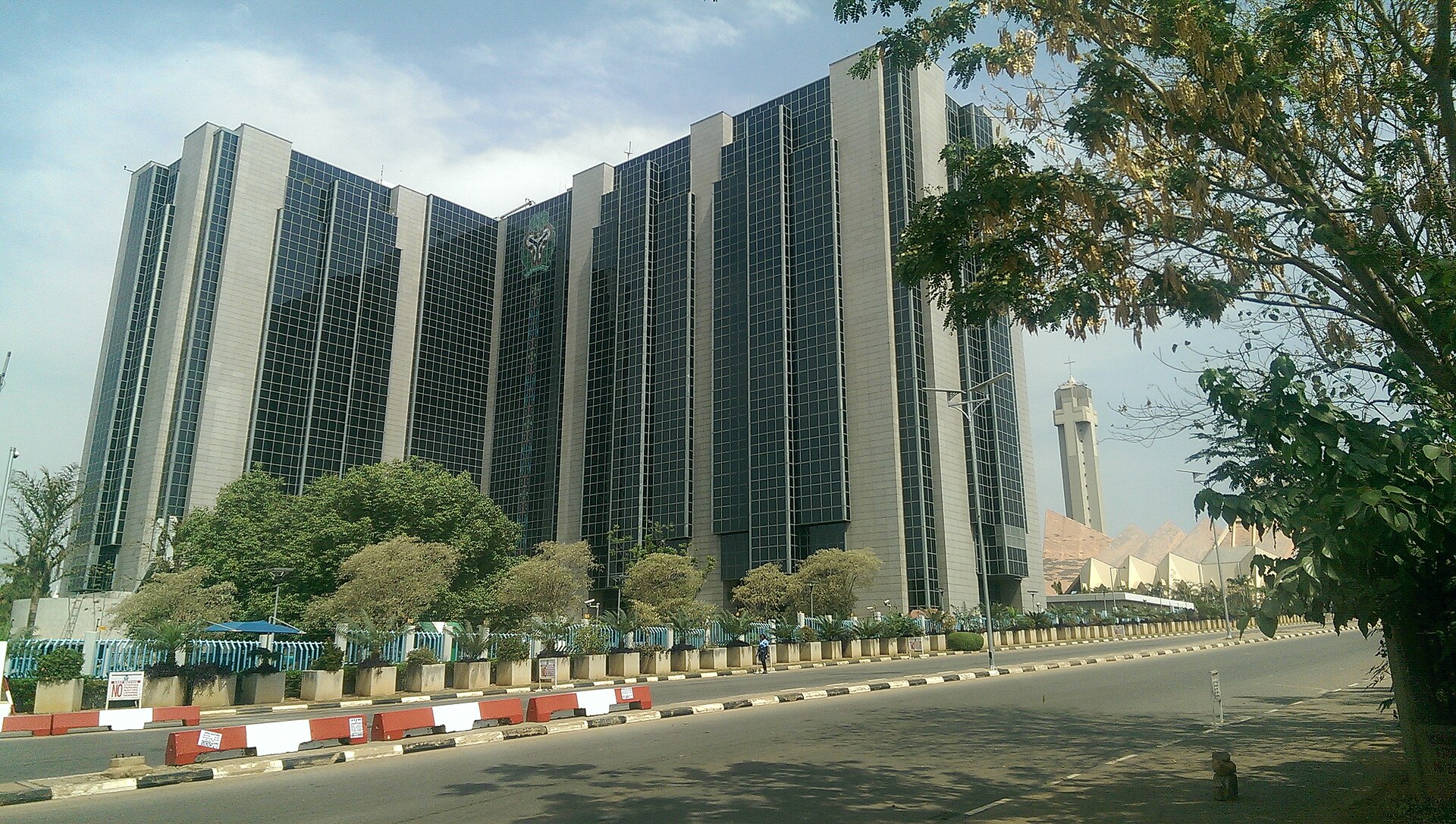
The Central Bank of Nigeria (CBN) kept its benchmark interest rate, the Monetary Policy Rate, at 23 per cent on Tuesday, according to ThisDay. Governor Olayemi Cardoso read the decision in Abuja after the 308th meeting of the Monetary Policy Committee (MPC), the group that sets the rate. It was the last meeting of the year, and ThisDay reported that 10 members attended.
In the same statement, Cardoso said strong spending on artificial intelligence and other technology sectors, together with wider use of them, could partly make up for the drag from high energy prices, according to Nairametrics. He expects world growth to slow this year. Vanguard carried the same passage of the communique, which also named trade policy uncertainty and shrinking government budgets as weights on growth.
Cardoso also listed what could still go wrong: disruption to energy and supply chains, exposure to cyberattacks (attempts to break into or disable computers and networks), costly commodities and freight, and a world trade system pulling apart. ThisDay reported that the committee worried the conflict in the Middle East could push up energy prices and raise production and transport costs at home.
The background
Price growth is slowing. In October, headline inflation stood at 14.06%, against 14.63% in September, a fifth monthly fall in a row, ThisDay reported. Core inflation was 10.78 per cent in October, against 12.95 per cent the month before, while food inflation was 19.13 per cent, against 19.59 per cent, according to Vanguard.
Nairametrics reported gross external reserves of $54.02 billion as of November 17, enough to cover 10.26 months of imports. The Composite Purchasing Managers' Index, a gauge of business activity, rose to 53.2 points in October from 53 in September.
Cardoso said the bank would keep its tight stance until inflation reaches single digits. He also said the cost of borrowing remained a concern, and that lending to the private sector had begun to recover slowly, according to ThisDay.
The AI angle
Cardoso's view echoes the International Monetary Fund (IMF). In October the IMF put world growth at 3.1% for 2026, as investment in AI infrastructure (the computing power AI tools run on) stayed strong enough to offset higher oil prices from the war in the Middle East, BusinessDay reported from the meetings in Bangkok.
The same IMF report carries a warning. If AI investment dropped steeply, asset prices could fall sharply and global GDP could be 1.1% lower by 2028, with US output down 1.8%. IMF managing director Kristalina Georgieva put it plainly at a Bretton Woods Committee event: “We now have an economy that is standing on one leg, the AI leg,” according to BusinessDay.
None of the four reports says how much of that AI money is being spent in Nigeria. For a business here, the nearer link is the exchange rate. ThisDay reported that firms were buying more dollars to cover obligations due next year, and any AI tool your business pays for in dollars joins that same queue.
What it means for owners and operators
The hold means borrowing stays expensive for now, and Cardoso himself called the cost of credit a concern. An AI project paid for with a loan has to pay back faster than the interest builds up.
The upside is steadier ground. Falling inflation, reserves above $54 billion and a rising business activity gauge make it easier to plan a tool budget a year ahead, which is what Cardoso said the bank wants businesses to be able to do.
Our take
Our view, drawn from the reporting in this story. It is analysis, not news.
A central bank naming AI as a support for growth shows how much weight the world economy now puts on one kind of spending. The IMF says the same thing, and then sets out what happens if that spending stalls.
For Nigerian operators, the lesson is to treat AI as a cost you control, not a boom you ride. Buy tools that pay back within the year, price them in naira at a weaker rate than today, and keep the freedom to switch off anything that does not earn its place.
The numbers
The benchmark rate is 23 per cent, headline inflation 14.06 per cent in October, reserves $54.02 billion, and the IMF's world growth forecast for 2026 is 3.1%.
What to do in your business tomorrow
- Write a naira price for every AI tool you pay for in dollars at today's rate and at a weaker one, and mark the point where you would switch each one off.
- Ask each AI tool supplier you pay in dollars whether it can bill you in naira: a yes is a pass, a no means that cost moves with the exchange rate.
- Make one person responsible for approving any AI project funded by a loan, with the rule that it must show savings before the first repayment is due.
Related coverage
Sources
- Nairametrics: Cardoso says AI investment could cushion impact of high energy prices
- Vanguard: Nigeria's $54bn external reserves cover 10 months' imports
- ThisDay: Cardoso Sees Better Impact of CBN Policies as Bank Holds MPR at 23%
- BusinessDay: IMF warns of risks from AI market correction and war