The short version
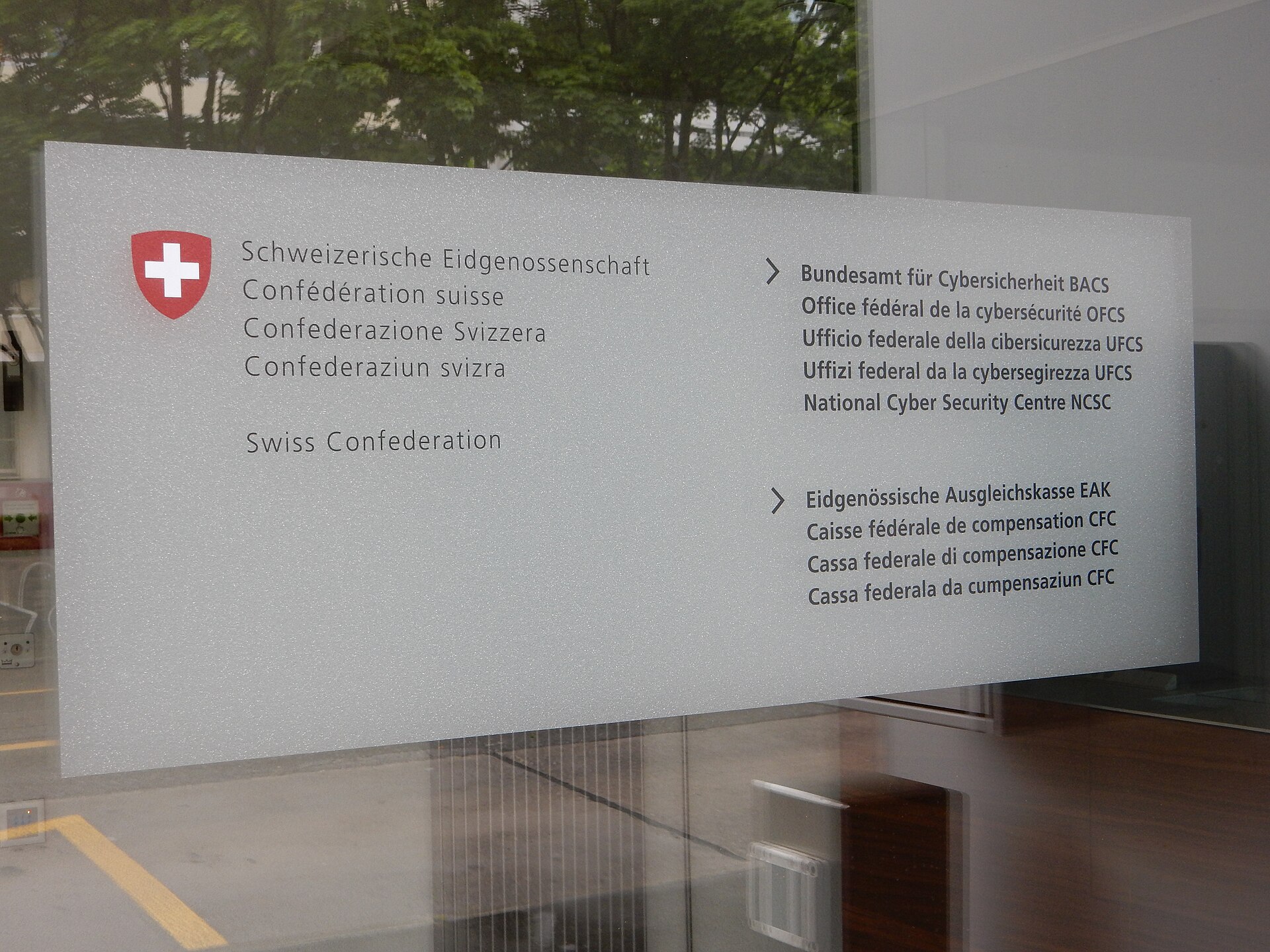
Switzerland's Federal Office for Cybersecurity says 5 recent attacks were run by AI agents, and the attackers got in at four of the targets. The agents used weak passwords and unfixed flaws, so the office wants critical updates installed within 24 hours.
What happened
Switzerland's Federal Office for Cybersecurity (BACS) said on Thursday that 5 cyber attacks over the past few days had used AI agents. The targets were companies and operators of essential services. In four of the five cases the attackers broke in, The Hindu reported, carrying a Reuters story.
Three of the targets were operators of essential services. Swiss public broadcaster SRF said these included electricity, water and telephone companies, though TechTimes notes that the office's own bulletin says only that at least two sectors were hit. The office has not said who ran the attacks.
Speaking to SRF, the office's director said none of the 5 attacks led to a major outage, according to TechTimes. Accounts of the success rate differ: the bulletin says every known case ended with the attackers inside, while the director put it at four of five.
The background
Since April 2025, Swiss operators of essential services have had to report cyber attacks within 24 hours, TechTimes reports. The office logged 143 such reports in the third quarter, up from 93 the quarter before, with 63 in September alone, according to cash.ch.
Paul Such, chief executive of Swiss Post Cybersecurity, told cash.ch that AI lets criminals get attacks ready faster and aim them better, and that for now attackers make better use of it than defenders do. The same article lists recent Swiss incidents at Beyond Gravity, Publica and Ricardo.
The AI angle
The office says these agents look for weak spots on their own, choose their tools, judge what worked and decide the next move, according to TechTimes. The same kind of software is also used for permitted break in tests, known as penetration tests, so the tool on its own proves nothing. What changes is speed and stamina: an agent works far faster than a person, keeps going, changes method when defenders react and can run many attacks at the same time.
The office named two open tools, ARTEX and CyberStrikeAI, as examples of this kind of software, but did not say either was used in Switzerland. Palo Alto Networks' Unit 42 counted 609 machines running ARTEX and 1,323 running CyberStrikeAI open on the internet as of October, TechTimes reported. Anyone can download such tools, so the name of a tool says little about who is behind an attack.
What it means for owners and operators
The good news is in the director's own words to SRF: an agent cannot get in where there is no hole to use. Almost everything the office describes comes down to two basics, passwords that are easy to guess and known flaws left unfixed on software open to the internet. Both are cheap to close compared with the cost of a break in.
The hard part is time. The office advises installing critical updates on that software within 24 hours. Industry practice is far slower: Verizon puts the median time to fully fix flaws at 43 days, and only 26% of flaws known to be under attack were fixed in 2025, down from 38%, TechTimes reported. A firm that cannot move that fast can take software off the open internet or limit who is allowed to reach it.
Our take
Our view, drawn from the reporting in this story. It is analysis, not news.
AI agents have not invented a new way in. They have made the old ways, a guessed password and an unfixed flaw, far quicker and cheaper to use against many firms at once. That moves the risk onto every business that leaves those doors open, not only power and water companies.
Raphael Reischuk, one of the founders of the National Test Institute for Cybersecurity, argues that Swiss firms are too complacent and that small businesses cannot lift their security alone, according to TechTimes. Whether or not outside help arrives, the test for any business is simple: how long does a known hole stay open on anything the internet can see? If the answer is weeks, an agent has weeks.
The numbers
5 attacks using AI agents, four of them successful. 24 hours is the office's advised window for critical updates. 43 days is the median time to fully fix flaws, according to Verizon.
Attack reports in the third quarter
Median days to fix
What to do in your business tomorrow
- Set the deadline for installing critical updates on every piece of software your business exposes to the internet at 24 hours.
- Test this week whether any staff account for email or remote access still opens with a password alone, and count a single one as a fail.
- Adopt a standing rule that any new software open to the internet gets a second login check, such as a code sent to a phone, before anyone uses it.